Τρίτη 29 Ιανουαρίου 2008

Oregon - Distant Hills ( US JazzWorld 1973 Vanguard Records)


1973Distant HillsVanguard VMD 79341

Collin Walcott (percussion, tabla, sitar, dulcimer, 1970-84),

Glen Moore (bass, clarinet, viola, piano),

Paul McCandless (bass clarinet, oboe, horn, soprano sax, synthesizer, wind ),

Ralph Towner (flugelhorn, classical guitar, piano, percussion, 12 string guitar, guitar, Hammond organ)

Towner, McCandless, Moore, and Collin Walcott (percussion, sitar, tabla) met as members of world music pioneer Paul Winter's "Consort" ensemble in the late 1960s. Their contributions were seminal in establishing the Winter Consort "sound" in compositions like Towner's "Icarus."
The four musicians broke away from Winter in 1970 to form their own group, Oregon (Towner and Moore met while students at the University of Oregon). They recorded their first record in 1970, but the label, Increase Records, went out of business before it could be released. (It was released by Vanguard in 1980 as Our First Record.) The group's first release was Music of Another Present Era in 1972. With that debut and its follow-ups Distant Hills and Winter Light (all on Vanguard), Oregon established itself as one of the leading improvisational groups of its day, blending Indian and Western classical music with jazz, folk, space music and avant-garde elements. The group released numerous albums on Vanguard throughout the 1970s, then made three records for Elektra. After a couple years hiatus devoted to their individual projects, the group resumed recording for ECM in 1983.
During a 1984 concert tour, Walcott was killed in an automobile accident in East Germany. Oregon temporarily disbanded, but reformed by 1987 to record Ecotopia (its final album for ECM) with new percussionist Trilok Gurtu. Gurtu made two further records as a member of the group, but by 1993 he had left; the group recorded two albums as a trio after his departure. With new member Mark Walker on drum kit, Oregon assumed a more conventional jazz orientation beginning with the 1996 album Northwest Passage. In 2001 the ensemble traveled to Moscow, Russia to record with the Moscow Tchaikovsky Orchestra. The recording garnered four Grammy nominations.
The group enjoys an avid and eclectic following. Apollo astronauts took a recording of Oregon's music to the moon and named two lunar craters after compositions by the ensemble "Icarus" and "Ghost Beads".From Wikipedia, the free encyclopedia

One of the earliest and finest exponents of world jazz, Oregon began life in 1970 as an offshoot of the Paul Winter Consort, in which the group's original members had played. From the beginning, the band eschewed most jazz conventions. Percussionist Collin Walcott played tabla, sitar, and dulcimer, among other instruments, but did not use a trap set; bassist Glen Moore doubled on clarinet, viola, and piano, and its front line was formed by a double-reedist (Paul McCandless) and an acoustic guitarist (Ralph Towner). The band's music differed from much of what had heretofore been considered jazz. The concept of blues and swing was given a much-reduced prominence in favor of other, less literal forms of tonal and rhythmic organization. For example, Indian ragas would occasionally replace chord changes, and talas would supplant swing time. The group's dynamic approach was quieter than typical by jazz standards, and their overall aesthetic somewhat introspective. Improvisation was central to the band's work, however, and in this sense their music is most firmly in the jazz tradition. Oregon's music is characterized by a heightened method of ensemble interaction, a rapt attention to timbral contrast, and an openness to any and all cultural influences. After Walcott's death in a car accident in 1984, the group disbanded for a time, before eventually replacing him with percussionist Trilok Gurtu. ~ Chris Kelsey, All Music Guide



Add To Facebook

Δευτέρα 28 Ιανουαρίου 2008

Lazy Farmer - Lazy Farmer (UK 1975 British Folk Rock)

This 1975 ultra-rarity was released only in Germany. Featuring the talents of band member and British guitar legend Wizz Jones as well as ex-COB member John Bidwell, it's a haunting collection of beautifully-arranged folk standards and original songs, along with a handful of glorious cover versions. This release has been produced with the full collaboration of the band, as originals are now highly sought-after. This is the first chance to hear it without paying hundreds of pounds

http://www.wizzjones.com/index.html
Wizz Jones: Guitar, Vocals
Sandy Jones: Five-String Banjo, Vocals
Don Coging: Five-String Banjo
John Bidwell: Flute, Flageolet, Guitar, Vocal
Jake Walton: Dulcimer, Hurdy-Gurdy, Guitar, Vocal

Origin: Cornwall, UKReleased: 1975/Songbird, 2005/Sunbeam
Produced by Carsten Linde and Lazy Farmer
Engineered by Conny Plank
Recorded at Conny's Studio, Neunkirchen, West Germany in January 1975.
Cover designs by Jerken Diederich and Annette Welke
This album is respectfully dedicated to the American banjo player John Burke, whose book 'Fiddle Tunes For The Banjo' inspired the formation of Lazy Farmer


Biography
by Richie Unterberger
Most noted for the presence of guitarist-singer Wizz Jones, a longtime staple of the English folk scene, Lazy Farmer managed to record one rare, German-only LP in the mid-'70s during their brief existence.
The band came together in 1973 in Cornwall, England, with Jones, his banjo-playing wife Sandy Jones, multi-instrumentalist John Bidwell (who'd been part of C.O.B. with ex-Incredible String Band member Clive Palmer), and Bidwell's flatmate and fellow multi-instrumentalist Jake Walton. After doing some gigging in Cornwall, they were joined by another banjo player, Don Coging, and played on four tracks on Wizz Jones' 1973 solo album When I Leave Berlin. Jones was doing a lot of touring in Germany at the time, and his German manager got Lazy Farmer a record deal with the German EMI subsidiary Songbird. Recorded near Cologne, Germany, in January 1975, their self-titled LP was accomplished if standard 1970s British folk, largely devoted to traditional material, although a song each by Wizz Jones, Ralph McTell, and Derroll Adams was included. After a German tour in 1975, the band broke up, though their album was restored to wide availability with a CD reissue in 2005.
.wikipedia./Wizz_Jones

Add To Facebook

Bruce Springsteen - We Shall Overcome: The Pete Seeger Sessions 2006

History-Wikipedia
This is Springsteen's first and so far only album of non-Springsteen material and contains his interpretation of thirteen folk music songs written or made popular by activist folk musician Pete Seeger and recorded in an informal, large band setting. On it he hired a group of lesser-known musicians from New Jersey and New York, augmented by Patti Scialfa, Soozie Tyrell, and The Miami Horns, who had all contributed to previous albums. Pete_Seeger

The album was Springsteen's second consecutive non-E Street Band, non-rock music project. The critical reception to the album was very positive, with E! Online calling it his "best album since Nebraska [1] and All Music Guide labeling it "rambunctious, freewheeling, [and] positively joyous".[2] PopMatters called it a "a sonic transfusion on the order of the Mermaid Avenue records".[3], which were Woody Guthrie songs recorded by Billy Bragg and Wilco.
The album, like its predecessor Devils and Dust, has been released on DualDisc, in a CD/DVD double disc set, and as a set of two vinyl records.
For the DualDisc and CD/DVD sets, the full album is on the CD(-side), while the DVD(-side) side features a PCM Stereo version of the album and a short film about the making and recording of the album. Two bonus songs also appear on the DVD(-side).
The subsequent Bruce Springsteen with The Seeger Sessions Band Tour took this musical approach even further.
On October 3, 2006, the album was reissued as We Shall Overcome: The Seeger Sessions - American Land Edition with five additional tracks (the two bonus tracks from before and three new numbers that had been introduced and heavily featured on the tour), new videos, an expanded documentary and liner notes. Added sales were minimal.

Bruce Springsteen – lead vocals, guitar, harmonica, B3 organ, and percussion
Frank Bruno – guitar
Jeremy Chatzky – upright bass
Charles Giordano – B3 organ, piano, and accordion
Ed Manion – saxophone
Art Baron – tuba
Richie "La Bamba" Rosenberg – trombone, backing vocals
Mark Pender – trumpet, backing vocals
Mark Clifford – banjo

Sam Bardfeld – violin
Soozie Tyrell – violin, backing vocals
Larry Eagle – drums and percussion
Patti Scialfa – backing vocals


Bruce_Springsteen
theseegersessions
get it here enjoy

Add To Facebook

Κυριακή 27 Ιανουαρίου 2008

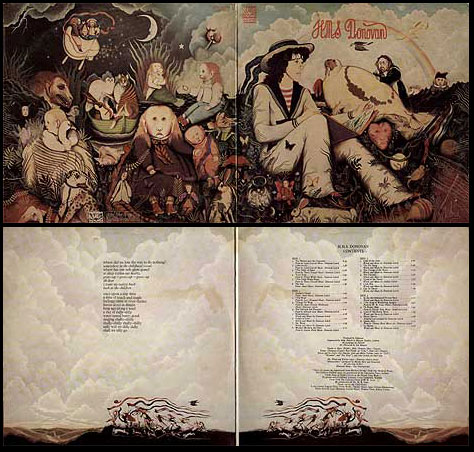
Donovan, Shawn Phillips, and Rev. Gary Davis on Rainbow Quest with Pete Seeger (Episode 23)


In 1966 Pete Seeger invited Shawn Phillips, Donovan and Rev. Gary Davis on his show
''Rainbow Quest''

Add To Facebook

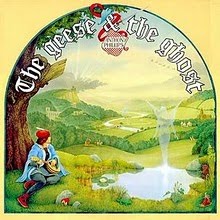
Shawn Phillips - Contribution (1970)

Shawn Phillips (born February 3, 1943) helped define folk-rock in the 1960s and progressive-new-age rock in the 1970s.
...an artist of such raw talent, ambition and good will... Phillips' main attraction is still his voice. Reedy and flexible, with a remarkable falsetto, it is a potent dramatic instrument.
Rolling Stone Magazine
The Shawn Phillips music. Kaleidoscopic and organic. Flowing. Living for a time. Incorporating every musical style from Bulgarian to quarter tone to African. But going its own way. Fulfilling one of the prerequisites of art -- It doesn't leave you feeling quite the same.


Shawn Phillips Guitar, Sitar, Vocals
Adrian Gaye Guitar
Chris Wood Wind
Paul Buckmaster, Mick Weaver, Steve Winwood Keyboards
Peter Robinson Percussion, Keyboards
Mox Harmonica
Chris Mercer Saxophone
Jim Capaldi, Candy John Carr Drums
Jimmy Coff , Remi Kabaka Percussion
Producer: Jonathan Weston for Philjo Music Inc.
Engineer: Robin Cable at Trident Studios, London, England
Shawn Phillips has almost twenty albums to his credit (of which millions have been sold) and a host of associations with some of the most respected names in the industry including Donovan, Paul Buckmaster, J Peter Robinson, Eric Clapton, Steve Winwood and many others, yet he is virtually forgotten except by his cadre of loyal fans. The Texas-born singer/songwriter was called "The best kept secret in the music business," by the late rock impresario Bill Graham.
Beginning in the 1960s, Phillips made noteworthy contributions to popular music. He performed at the "Isle of Wight" festival and was cast to play the lead in the original production of "Jesus Christ Superstar" (he had to withdraw due to his heavy recording and touring schedule.)
Throughout the 60s Phillips worked the folk music scene in San Francisco's Haight-Ashbury, New York's Greenwich Village, and London. In 1967 Phillips moved to Positano, Italy, where he remained throughout the 1970s, writing some of his most well known work.

This period produced the albums 'Contribution', 'Second Contribution', 'Collaboration' and 'Faces".
Four of his albums "Faces," "Bright White," "Furthermore" and "Do You Wonder" made it into the Billboard Top 100. In addition, the singles, "Lost Horizon," "We" and "Woman" made Billboard's top 40. One of the most sought after Christmas songs is Phillips' 1970 45rpm release of "A Christmas Song" on A&M 1238. The track is now available on the re-issue of Faces.
His latest album, 'No Category' featuring his longtime collaborators Paul Buckmaster and Peter Robinson was released in 2002.
Today Shawn lives in Port Elizabeth, South Africa dividing his time between writing, touring, and his work as an emergency medical technician (EMT) and firefighter.
From Wikipedia, the free encyclopedia
http://www.shawnphillips.com/index.html

Add To Facebook

Long John Baldry - It Ain't Easy (1971 UK British Rock Blues)

According to extensive notes about Long John Baldry's career in the re-release 2005 CD, Rod Stewart was brought on board to produce "It Ain't Easy" for Warner Brothers. Soon after in 1970, Stewart met Reg Dwight (later taking the name Elton John) at a party and the piano player joined on, too. Stewart and John each produced half of this bluesy album, with John contributing much of the piano work. Stewart brought in mate Ron Wood to play guitar, as well as many others who would appear on Stewart's Every Picture Tells a Story, released later in 1971.
The Baldry album features his biggest U.S. hit, "Don't Try to Lay No Boogie-Woogie on the King of Rock and Roll." In the liner notes, Baldry notes how Stewart's loose and late-night recording sessions affected the tracks, "especially those recorded on my thirtieth birthday when he showed up with cases of Remy Martin cognac and several measures of good quality champagne!" Baldry points out that "Don't Try to Lay No Boogie-Woogie on the King of the Rock and Roll" was recorded "whilst laying on the floor.'

L.J.Baldry - vocals
Ian Armit - piano
Sammy Mitchell - guitar
Pete Sears (Jefferson Starship) - bass
Mickey Waller - drums

The 1971 release also features "Black Girl," the centuries-old American folk song most associated with Lead Belly, though covered by the likes of Bob Dylan, the Grateful Dead, Dolly Parton and Nirvana. Baldry does an impressive version singing with Maggie Bell, who also appeared on Every Picture Tells a Story.
"It Ain't Easy" also includes Willie Dixon's classic "I'm Ready" and an Elton John-Bernie Taupin song, "Rock Me When He's Gone". The story goes that John, a budding star in the early 1970s, took his last name from Long John Baldry.

John William Baldry, popularly known as Long John Baldry, (January 12, 1941July 21, 2005) was a blues singer from England. He sang with many notable British musicians, with Rod Stewart and Elton John appearing in bands led by Baldry at various stages of the 1960s. He enjoyed pop success in the UK where "Let the Heartaches Begin" reached No. 1 in 1967 and in Australia where his duet with Kathi McDonald "You've Lost That Lovin' Feelin'" reached No. 2 in the charts in 1980. Baldry lived in Canada from the late 1970s until his death, where he continued to make records and do voiceover work. He is known by a younger generation as the voice of Dr. Robotnik in Adventures of Sonic the Hedgehog.

IN LOVING MEMORY OF LEGENDARY LONG JOHN BALDRY
(january .12.1941 - july .21.2005)


Add To Facebook

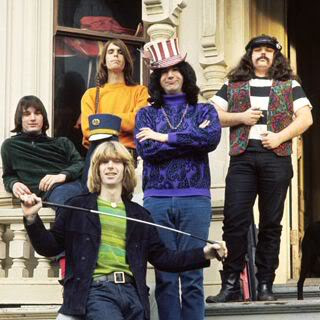
Goose Creek Symphony - Established (The First Album 1970 US Psychedelic Jam Band Folk Country Rock)

If the Grateful Dead had come from Kentucky instead of San Francisco, they might have sounded much like these guys. "This song might sound kinda strange, but it's got more soul than Home on the Range," they accurately sing in "Talk About Goose Creek and Other Important Places," an eight-minute psychedelic showstopper complete with Beatles-style tape tricks. This album is a fun listen that can suck even a city slicker into a stoned, good-time, backhills vibe.


The Goose Creek Symphony is an American rock band, originally a side project for Richie Hart and the Heart Beats and best known for their 1972 cover of Janis Joplin's song, Mercedes Benz. The band signed to Capitol Records in 1970, and new members were added: Mike McFadden of Superfine Dandelion, Bob Henke, Fred Wise on banjo and fiddle and Paul Spradlin, a guitarist credited as Paul Howard. They continued recorded to 1976, then reformed in 1990. The band has continued touring to popular acclaim


Paul Howard Guitar, Vocals Charles Gearheart Acoustic Guitar Michael McFadden & Paul Spradlin Guitars Bob Henke Guitar Keyboards, Vocals Pat Moore & David Birkett Bass Chris Lockheart Drums Jim Tolles & Fred Wise Fiddle Harold Williams & Randall Bramblett Horns Goose Creek Symphony Producer Steve Forman Horn Arrangements Tim Ramsey Engineer

AMG Biography
by Zac Johnson
Goose Creek Symphony found its roots in the Phoenix, AZ, area originally as a countrified side project for Richie Hart & the Heart Beats. Vocalist and guitarist Charles Gearheart (aka Richie Hart) spent his childhood "up Goose Creek Hollow" in Floyd County, KY, and when he put together his good-time country-rock group, he drew upon his home's rich musical heritage as well as its name. In 1970, Gearheart and a group of local studio musicians assembled a handful of songs and presented them to Capitol Records.


Capitol signed his project, forcing Gearheart to assemble a touring group. Banjo player and fiddler Fred Weisz was brought in to complement existing guitarists Paul Spradlin (listed as "Paul Howard" on the album), Bob Henke ("Williard"), Mike McFadden (following the breakup of his psychedelic group Superfine Dandelion), as well as a rotating cast of bassists and drummers.With a sound very similar to what the Band was doing at the same time, Goose Creek Symphony were rock & rollers who played a very faithful brand of country music, all the while layering rhythms and harmonies along the same lines as Buffalo Springfield and the Grateful Dead.


They released albums through the mid-'70s, with that streak ending in a long hiatus from 1976 to 1990, when the group decided to re-form and record again.Their marriage of earthy instrumentation and easygoing vibes have been able to give the group a certain longevity. Into their third decade, Goose Creek Symphony is drawing strong groups of fans to their summer festival appearances, similar to what the Dead and Jimmy Buffett have known.

Charlie Gearheart today
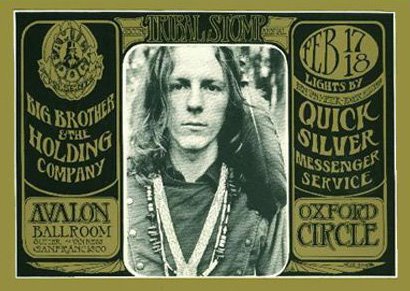


Goose Creek Symphony has developed their own style of jam-band original Americana music since the mid-'60's. They perform at the Jammin at Hippie Jack's Americana Music Festival in Overton County, TN.


Goose Creek Symphony is considered by many to be one of the most original bands of their time. Major record labels (Capitol & Columbia) of the 60s/early 70s didn't know what to do with a band that played a mixture of rock and roll, folk, jazz and country with an undeniable hillbilly influence, a hippie attitude and a reckless sense of instrumental daring. They used horns and fiddles as well as effects and blended it with psychedelic rock and roll. The true definition of "Cosmic American Music".


Add To Facebook