Εμφάνιση αναρτήσεων με ετικέτα folk. Εμφάνιση όλων των αναρτήσεων

Τετάρτη 30 Δεκεμβρίου 2009

Tim Hart, founder member of Steeleye Span, dies of lung cancer at 61


Tim Hart, founder member of Steeleye Span, dies of lung cancer at 61


By THE ASSOCIATED PRESS (CP) – 1 hour ago

MADRID, Spain — Tim Hart, a founding member of the British folk-rock group Steeleye Span, has died of lung cancer, his daughter said Wednesday.

Hart, 61, died Dec. 24 in La Gomera in Spain's Canary Islands, where the Briton had lived since retiring from the music scene, Sally Hart told The Associated Press.

He had returned to La Gomera three weeks ago after spending a year in Britain receiving treatment,
she said.:                                                                               

"In the last few days he became very weak, and had chest pains. His body had suffered greatly from the cancer treatment," 

Hart was a star of the 1960s folk scene in Britain, first gaining fame in a musical partnership with singer Maddy Prior in 1966. The duo recorded two albums of "Folk Songs of Olde England," with the versatile Hart backing their singing on guitar, mandolin, dulcimer, banjo and violin.

In 1971, Hart and Prior joined with Ashley Hutchings, who had left the Fairport Convention to form a new band. The new project, at Hart's suggestion, was named Steeleye Span after a character in a Lincolnshire folk song, "Horkstow Grange."

Hart left Steeleye Span in 1983, but appeared at a charity concert with the group in 1995. Last year, he appeared with Prior at a BBC concert in London.

Living on La Gomera, Hart developed his interest in photography. He called the island "my inexhaustible subject" and did his own pictures for his English language guide to the island, published in 2004.

"In what now feels like a previous life, I once spent 16 years as a member of the English folk-rock band Steeleye Span," Hart wrote on his Web site.
"As the Everly Brothers so rightly sang we did it for the stories we could tell. But after a few years of travelling too fast around the world I got myself a camera, a Pentax Spotmatic, in order to provide a more substantial, and accurate, archive of memories," he wrote.

Hart is survived by his wife Connie, and a daughter and son from a previous marriage. Funeral arrangements were not announced.
Copyright © 2009 The Canadian Press. All rights reserved.


Tim Hart and Maddy Prior - Folk Songs of Old England, Vol.1 (1968)
Tim Hart and Maddy Prior "Folk Songs of Olde England Vol. 1" 1968
Tim Hart and Maddy Prior Folk Songs of Olde England Vol. 2" 1969
Maddy Prior & Tim Hart "Summer Solstice" 1971

Steeleye Span "BBC Sessions" 1970-1971
Steeleye Span "On BBC TV" 1975
Steeleye Span - Hark! The Village Wait
Steeleye Span  discography d/l
and here
@@@@@@@@@@@@@@@@@@@@@@@@@@@@@@@@@@@@@@@@@@@
May God Rest His Soul!

Add To Facebook

Tim Hart & Maddy Prior: Heydays : The Solo Recordings 1968-1976


This compilations consists of all tracks from the three - now deleted - albums by Tim Hart and Maddy Prior, Folk Songs of Old England Vol. 1 and Vol. 2 and Summer Solstice. This double CD was originally to be titled Heyday (see right cover picture) but was renamed to Heydays on first delivery. All tracks have been remastered and the sound quality is much improved..
All tracks trad. arr. Tim Hart, Maddy Prior except
Tracks 1-13, 16 trad. arr. Tim Hart;
Track 23 John Conolly;
Track 34 Copper Family, Austin John Marshall;
Track 36 Ewan MacColl
 
MADDY PRIOR - vocals, 5-string banjo

TIM HART - vocals, guitar, fiddle, banjo 


The songs on the 'FOLK SONGS OF OLDE ENGLAND Vol. 1 & 2' are either sung a-capella or accompanied with the minimum instrumentation - allowing the solo and duetted vocals to shine out unhindered, thus enabling astute listeners to make out every single lyric (and even to sing along if they know the words). The highlight from this collection must be Tim Hart's heart-rending 'The Dalesman's Litany' - the tale of a young Victorian farmer, evicted from his smallholding and forced to seek work in the hellish industrial centres of Northern England. These two albums were released before Tim and Maddy joined Steeleye Span, whereas 'SUMMER SOLSTICE' was recorded as a side project during Steeleye's run.
Folk Songs of Old England Vol. 1   1968


Folk Songs of Old England Vol. 2   1968


Summer Solstice is a 1971 album by Maddy Prior and Tim Hart.
 The album was recorded after the duo had joined Steeleye Span. The songs are mostly pastoral, with subtle understated instrumental accompaniment. Also issued on CD in 1991 on the Shanachie label. Original cover shown, catalogue number: Crest 12.

  Track listing
1.False Knight On The Road (3:03)
2.Bring Us In Good Ale (3:51)
3.Of All The Birds (0:53)
4.I Live Not Where I Love (4:25)
5.The Ploughboy and The Cockney (3:40)
6.Westron Wynde (0:27)
7.Sorry The Day I Was Married (1:29)
8.Dancing At Whitsun (3:40)
9.Fly Up My Cock (1:45)
10.Cannily Cannily (2:25)
11.Adam Catched Eve (0:25)
12.Three Drunken Maidens (2:14)
13.Serving Girls Holiday (3:41)
14. I Was A Young Man
15 .Betsy Bell
16.Famous Flower Of Serving Men

Slightly more produced than its predecessors, 'SUMMER SOLSTICE' is still as traditional as a hobby horse on the village green. Highlight? Again a Tim Heart rendition, 'Dancing At Whitsun' - surely one of the saddest songs ever written (the saddest being 'The Band Played Waltzing Matilda' by June Tabor - but that's another story). This lament to the losses of young Englishmen cut down in the Great War - leaving a whole generation of young women to grow up as 'spinsters' - is sung by a Tim Hart on the verge of tears and a string arrangement by Robert Kirby (Nick Drake, Vashti Bunyan, etc.) to rival that of Nick's 'River Man'. A highly emotive and achingly beautiful song.

It's not all sorrow and laments though, there are many jolly songs in this collection - some familiar, some unique to these sets - and all performed brilliantly and understated by two of the luminaries of the English trad/folk scene.
 Personnel

Maddy Prior – vocals
Tim Hart – vocals, guitar, appalachian dulcimer, harmonium, psaltery, tabor
Andy Irvine – mandolin
John Ryan – string bass
Gerry Conway – percussion, bells
Pat Donaldson – electric bass
Robert Kirby – string arrangement on "Dancing At Whitsun"


enjoy  !  part1 & part2


Add To Facebook

Κυριακή 13 Δεκεμβρίου 2009

Jackson C. Frank - Blues Run The Game 1965 US Folk (Brilliant American folk musician.)


Biography


One of the most interesting and enigmatic cult figures of 1960s folk, Jackson Frank's reputation rests almost solely upon one hard-to-find album from the mid-'60s. A stronger composer than a singer, he nonetheless had an appreciable influence on many more famous performers of the decade, including Paul Simon, Sandy Denny, and Nick Drake.
Trauma and misfortune have dogged Frank throughout his life. At the age of 11, a fire in his elementary school killed many of his classmates, and left him with burns over most of his body. He eventually recovered and learned to play the guitar, and hung around the early-'60s New York coffeehouse scene with John Kay, later of Steppenwolf. A large insurance settlement enabled him to travel to England after he turned 21, and it was there that he made most of his impact.
Frank shared a London flat with fellow American expatriates Paul Simon and Art Garfunkel, who were briefly based there in the mid-'60s prior to their first hit, "The Sounds of Silence." Simon, then a struggling folk singer/songwriter himself, was impressed enough to produce Frank's self-titled album, released in the U.K. only. While Frank's voice was tremulously earnest, the quality of the compositions was often impressive, with a reflective, melancholic air that most likely influenced Simon, Al Stewart (who made his recording debut on one of the LP's tracks, "Yellow Walls"), and Nick Drake (who covered one of the songs, "Here Come the Blues," on late-'60s home tapes that have been extensively circulated as a bootleg).

Frank's album was well-received in British folk circles, and several of his songs made their way into the repertoire of his friend Sandy Denny, who recorded a couple, "Milk and Honey" and "You Never Wanted Me," on her own debut LP. (She also recorded a version of "You Never Wanted Me" with Fairport Convention, and a 1966 demo of "Blues Run the Game" appears on her Dark the Night bootleg.) Frank, however, was unable to come up with a similar quality of material for a follow-up. This, combined with stage fright, depression, and an end of the funds from the insurance setttlement that had enabled him to travel in high style, meant that he returned to the States in 1969 without releasing another album.
Based in Woodstock, NY, Frank continued his songwriting, but family and depression problems resulted in homelessness by the mid-'70s. For most of the next two decades, Frank lived on the streets or hospitals, too discouraged to contact old friends and family. He was further hobbled by arthritis, inappropriate medication for his mental problems, and a shooting incident that left him legally blind in his left eye. In the mid-'90s, a sympathetic folk fan, Jim Abbott, helped Frank regroup from his setbacks by helping him gain more appropriate medical assistance and settle back in Woodstock, where he resumed songwriting, and occasionally performs. A 1995 profile in Dirty Linen magazine effectively "rediscovered" the missing legend, and legendary vintage recordings were finally issued on CD in 1996. ~ Richie Unterberger, All Music Guide


Jackson C. Frank (album)1965

1980s - death

In 1984, Frank took a trip to New York City in a desperate bid to locate Paul Simon, but he ended up sleeping on the sidewalk. His mother, who had been in hospital for open heart surgery, found him gone with no forwarding address when she arrived home. He was living on the street and was frequently admitted and discharged from various institutions. He was treated for paranoid schizophrenia when he actually had depression caused by the trauma he had experienced as a child. Just as Frank’s prospects seemed to be at their worst, a fan from the area around Woodstock, Jim Abbott, discovered him in the early 1990s. Abbott had been discussing music with Mark Anderson, a teacher at the local college he was attending. The conversation had turned to folk music, which they both enjoyed, when Abbott asked the teacher if he had heard of Frank. He recollected:

"I hadn’t even thought about it for a couple of years, and he goes, ‘Well yes, as a matter of fact, I just got a letter from him. Do you feel like helping a down-on-his-luck folk singer?"  continued here

Jackson in April 95, after years in the streets, both legs crippled and a gunshot in the eye..his life is truely depressive and depraved..

 http://en.wikipedia.org/wiki/Jackson_C._Frank

 http://www.hut-six.co.uk/jcfrank/

 Jackson C. Frank / Blues Run the Game

jackson c frank lived only a short time. and no one really got to hear much of what he was singing.

a brilliant song writer.
this is one of my favorites of his.
peace @


Add To Facebook

Σάββατο 4 Ιουλίου 2009

Εφυγε ο Λάκης Καραλής


Σήμερα 1η Ιουλίου 2009 πέθανε ο Λάκης Καραλής.

Η νεκρώσιμη ακολόυθία θα ψαλεί αύριο 2η Ιουλίου 2009 στη 13.00, στην Παναγιά Μαρμαριώτισσα (οδός Σοφοκλή Βενιζέλου) στο Χαλάνδρι, και η ταφή θα γίνει στις 15.00 στο Νεκροταφείο Χαλανδρίου.
Για κακή τύχη όλων όσων "μεγάλων" της Αριστεράς μένουν πίσω του, όλων των επαγγελματιών κομματαρχών-γραφειοκρατών, για κακή τύχη όλων των Τσίπρων και των Παπαρήγων, όλων των ανίκανων ηγετίσκων, γκρούπων και γκρουπούσκουλων κοινοβουλευτικών και εξωκοινοβουλευτικών, για κακή τύχη όλων όσων ζουν από τον αργό θάνατο της Αριστεράς, όσων έμπλεξαν τα μπούτια τους με δημοσκοπήσεις και σαλονάκια, όσων έχουν μοιράσει την τράπουλα ανάμεσα στον προϊστορικό σταλινοειδή δογματισμό και τον "ανανεωτικό" κυριλέ ρεφορμισμό, για κακή τύχη όλων αυτών...
...το όραμα μιας υγιούς, ισχυρής και ενωμένης Αριστεράς, ένα όραμα ΚΑΙ του Λάκη Καραλή, μένει πίσω του και μετά τον θάνατό του, παρακαταθήκη πολύτιμη και ελπίδα παντοτινή.
ηρ.οικ.
ΥΓ1: Για το δίσκο "SUPERMARKET":
http://mousikaproastia.blogspot.com/2008/07/supermarket.html
ΥΓ2: Ο Bosko γράφει:http://bosko-hippydippy.blogspot.com/2009/07/blog-post.html
κειμενο απο Μουσικά Προάστια


6/7/2008

Επανακυκλοφορεί ο δίσκος SUPERMARKET του Λάκη Καραλή


Κυκλοφορεί για πρώτη φορά στην Ελλάδα, 37 χρόνια μετά,
μαζί με πρόσθετο υλικό
ακυκλοφόρητα τραγούδια των Μίκη Θεοδωράκη και Λάκη Καραλή,
σε στίχους Γιάννη Νεγρεπόντη, Περικλή Κοροβέση και Λάκη Καραλή.
Ο πρωτότυπος δίσκος Supermarket με 14 τραγούδια του Λάκη Καραλή (στίχοι, μουσική, ερμηνεία) κυκλοφόρησε το 1971 –ως δίσκος βινυλίου- σε 500 αντίτυπα στο Λονδίνο.
Σήμερα, 37 χρόνια μετά, ο δίσκος κυκλοφορεί (σε CD) από την ανεξάρτητη εταιρία ΤΡΟΧΟΣ (των αδελφών Αλέξη και Δημήτρη Βάκη) μαζί με έξι επιπλέον τραγούδια, μεταξύ των οποίων και δύο τραγούδια του Μίκη Θεοδωράκη σε στίχους του Γιάννη Νεγρεπόντη: «Μου μιλάτε για κείνον» και «Σκέψου καλά κυρ- Βουλευτή». Το δεύτερο μάλιστα δισκογραφείται για πρώτη φορά.
Στις νέες αυτές ηχογραφήσεις του 2008 συναντάμε επίσης τη συνεργασία του Περικλή Κοροβέση, που απαγγέλλει ένα απόσπασμα από τον «Κοινό Τόπο» και έχει γράψει τους στίχους στο τραγούδι «Κυριακή Απομεσήμερο», αλλά και της εννιάχρονης Μαρίας Λαχανά, που τραγουδά «Πιφ πως βρωμάει».
Το 1971, το Supermarket ηχογραφήθηκε σε ένα στούντιο της Camden Street στο Λονδίνο, με τα έξοδα να καλύπτονται δια της μεθόδου του ρεφενέ.
Είχε προηγηθεί (τρία χρόνια νωρίτερα, στη Βουδαπέστη), η διάσπαση του Κομμουνιστικού Κόμματος της Ελλάδας. Οι αντιδράσεις στο δίσκο –που κυκλοφορούσε χέρι με χέρι στους αντιδικτατορικούς κύκλους των Ελλήνων- ήταν ποικίλες, αφού τα τραγούδια του Καραλή δεν έπαιρναν τη θέση καμμιάς από τις δύο αντιμαχόμενες πλευρές, αλλά σχολίαζαν ειρωνικά την πάλη για τη «σφραγίδα», την ίδια στιγμή που η επίσημη Αριστερά ήταν ανήμπορη να παρακολουθήσει τις εξελίξεις και να παρέμβει ουσιαστικά.
Ο τίτλος «Supermarket» δεν ήταν τυχαίος: προέρχεται από μια φράση κάποιου κομματικού στελέχους, τότε, που έλεγε πως «το κόμμα, έτσι καθώς διασπάται και διαλύεται, έχει καταντήσει σούπερ μάρκετ». Απογοητευμένος από τα συμβάντα, ο Λάκης Καραλής γράφει για «τη γραμμή του κόμματος» όπου «κάποιος είναι αόμματος», ενώ «σ’ άλλους τάζουνε λουκούμια, σε άλλους παίρνουν μέτρα για κουστούμια»…
Τα τραγούδια του «Supermarket» ισορροπούν ανάμεσα στο πέταγμα του συνειρμού και τον σκληρό ρεαλισμό, ανάμεσα στην ποίηση και την πολιτική, με την ακραία χρήση του στίχου. Από αυτήν προκύπτει τελικά η μουσικότητα και ο Λάκης γίνεται η εξαίρεση που επιβεβαιώνει τον κανόνα. Είναι ο γιος του παπά-Θανάση από τη μια και ο σουρρεαλιστής ριμαδόρος από την άλλη. Επαναστάτης (με και χωρίς αιτία) από τη μια, ανένταχτος της αριστεράς από την άλλη. Δεν τον άφηναν οι φίλοι του να οργανωθεί, δε θα το άντεχε ούτε θα τον άντεχαν. Φοιτητής ιατρικής από τη μια, κιθαρίστας και τραγουδιστής στα «Τραγούδια του αγώνα» του Μίκη, από την άλλη.
Το «Supermarket» είναι ένας δίσκος αιρετικός, πού προκάλεσε την αντίδραση πολλών και που στα χρόνια της μεταπολίτευσης εξελίχτηκε σε ένα δυσεύρετο ντοκουμέντο μιας ταραγμένης και άβολης εποχής.-----

Σημείωμα του Λάκη Καραλή για την πρώτη έκδοση του 1971
Τα οχτώ τραγούδια της πρώτης πλευράς γράφτηκαν το ‘68. Ήταν η εποχή που η διάσπαση του κόμματος μας συγκλόνισε. Όσα αποκαλύφθηκαν, με το ξέσπασμα της μακρόχρονης κρίσης, στάθηκαν για μας –τη νέα γενιά– ένα οδυνηρό ξάφνιασμα. Γράφτηκαν και ειπώθηκαν πολλά. Δεν είχα άλλο τρόπο έκφρασης, από το τραγούδι μου. Δεν είχα άλλο όπλο, από την κιθάρα μου. Αυτά τα τραγούδια εκφράζουν τη δική μου αγωνία μέσα σ’ αυτή την αποσύνθεση. Το όνομα του Κολιγιάννη μπορεί κάλλιστα να αντικατασταθεί με οποιοδήποτε άλλο της καθοδηγητικής βιτρίνας. Τα ερωτήματα δεν έχουν προσωπικό στόχο. Αφορούν ολόκληρη την πολιτική της Ελληνικής Αριστεράς, όπως εκφράζεται είτε από τη μια, είτε από την άλλη μερίδα του κόμματος.
Είναι σίγουρο πως θα ενοχληθούν πολλοί -κι από το ύφος κι από την αθυροστομία μου. Αλλά τα τραγούδια μου δεν απευθύνονται στα –ανεπανόρθωτα– βουλωμένα αυτιά της καθωσπρεπικής υποκρισίας. Αν σε κάτι ωφέλησε η δικτατορία –όσο κι αν αυτό φαίνεται οξύμωρο– είναι γιατί έβαλε σε μας καυτά ερωτηματικά, ανύπαρκτα προηγουμένως. Τα «ταμπού» γκρεμίστηκαν, μαζί με τους μύθους και τα είδωλα. Η «γραμμή», που ερχόταν από κάποια μυστικά κι αόρατα κέντρα, μπήκε σε αμφισβήτηση –συζητιέται.
Τα υπόλοιπα τραγούδια γεννήθηκαν από τις τωρινές εμπειρίες μου, από τους νέους προβληματισμούς, την επιτακτική αναζήτηση του νέου δρόμου, την προσωπική στάση απέναντι στα προβλήματα που σήμερα αντιμετωπίζουμε, τις ευθύνες που πρέπει επί τέλους ν’ αναλάβουμε. Ειδικότερα «η περίοδος της Ροζέτας» είναι γραμμένη από τίτλους της «Νέας Πολιτείας», αποσπάσματα λόγων του Παπαδόπουλου και κειμένων του «Ρομάντσου».
Καταλήγοντας, θα ‘θελα να πω ότι κανείς δεν θα στενοχωρηθεί αν αυτά τα τραγούδια ξεχαστούν, όσο γίνεται πιο γρήγορα.
Κι ένα υστερόγραφο από το 2008…
Ο Μίκης Θεοδωράκης είναι αυτός που, το 1966, μου έδωσε τη σπρωξιά λέγοντας “γιατρός Λάκη δε γίνεσαι, παρ’ το απόφαση, είσαι μουσικός”. Και μου εμπιστεύτηκε τα δύο πρώτα τραγούδια που είπα στη σκηνή, σε στίχους του αξέχαστου Γιάννη Νεγρεπόντη. Κατά κάποιο τρόπο, ο Μίκης “ευθύνεται” για όσα επακολούθησαν. Όπως και να’ χει, τους ευχαριστώ και τους δυο μέσα από την καρδιά μου.
Ο Περικλής Κοροβέσης (κείμενο του οποίου περιλαμβάνεται στο ένθετο του CD, μαζί με κείμενα του Γιώργου Βότση και του Δημήτρη Παπαχρήστου) σημειώνει «Αυτός ο δίσκος, που ξανακυκλοφορεί, κάποτε ήταν ένα παράνομο μπεστ σέλλερ. Αν ξαναγίνει και δεύτερη φορά, σημαίνει πως τίποτε δεν πήγε χαμένο».-----

SUPERMARKET, 1971
01. Η σφραγίδα (1:12)
02. Κολιγιάννης (2:21)
03. Το σεργιάνι (2:22)
04. Το ασβέστωμα (1:36)
05. Οι εκπρόσωποι (1:47)
06. Η συνέλευση (1:36)
07. Χαφιές (1:20)
08. Ο Μαρξ δεν τό ‘πε (0:56)
09. Ο τοίχος (1:36)
10. Μια μέρα (4:20)
11. Τα παιδιά (2:06)
12. Η περίοδος της Ροζέτας (12:32)
13. Επανάσταση (2:19)
14. Οι σαλτιμπάγκοι (3:27)
ΠΡΟΣΘΕΤΕΣ ΗΧΟΓΡΑΦΗΣΕΙΣ 2008
15. Μου μιλάτε για κείνον / Γιάννη Νεγρεπόντη-Μίκη Θεοδωράκη (3:06)
16. Σκέψου καλά κυρ-βουλευτή* / Γιάννη Νεγρεπόντη-Μίκη Θεοδωράκη (2:32)
17. Πιφ, πως βρωμάει* / Τραγουδά η Μαρία Λαχανά (4:32)
18. Κάτω το κεφάλαιο, ζήτω το προλετάριο* (10:40)
19. Ξέρω πως θα είναι ο θάνατος / Απαγγελία: Περικλής Κοροβέσης (1:06)
20. Κυριακή απομεσήμερο* / Περικλή Κοροβέση-Λάκη Καραλή (4:40)
21. Το θύμα θυμάται* (1:28)
* Δισκογραφούνται για πρώτη φορά
Συνολική διάρκεια: 68:28
Πρώτη έκδοση: Μάρτιος 1971, Λονδίνο
Δεύτερη έκδοση: Ιούλιος 2008, Αθήνα
Διεύθυνση παραγωγής: Αλέξης Βάκης, Δημήτρης Βάκης
Συντελεστές:
Supermarket, 1971
Στίχοι-μουσική: Λάκης Καραλής
Λάκης Καραλής: κιθάρα, τραγούδι
Χαράλαμπος Βιολάρης: βιολί (12)
Ηχογράφηση, μίξη: David Vorhaus / Kaleidophone Studios, Λονδίνο
Σχέδιο εξωφύλλου: Νίκος Ναυπλιώτης
Παραγωγή: Λάκης Καραλής
Ηχογραφήσεις 2008
Στίχοι: Γιάννης Νεγρεπόντης, Περικλής Κοροβέσης, Λάκης Καραλής
Μουσική: Μίκης Θεοδωράκης, Λάκης Καραλής
Ενορχήστρωση: Αλέξης Βάκης (15,16,17)
Τραγουδούν: Λάκης Καραλής, Μαρία Λαχανά (17)
Παίζουν οι μουσικοί:
Λάκης Καραλής: κλασσική κιθάρα (18,20,21)
Βασίλης Μασσαλάς: ακουστική κιθάρα (15,16), κλασσική κιθάρα (17)
Θανάσης Σοφράς: ηλεκτρικό μπάσσο (15,16), κοντραμπάσσο (17)
Νίκος Τουλιάτος: τύμπανα (16)
Γιάννης Βιλλιώτης: μαντολίνο (15,16)
Μόδεστος Τριπολιτσιώτης: τούμπα (16)
Φωνητικά: Δημήτρης Βάκης (15)
Χορωδία: Τάσος Ράπτης, Μαρία Σκούπα, Γρηγόρης Καραντινάκης, Γρηγόρης Ψαριανός, Έρη Μανουρά, Χαρίλαος Τρουβάς, Αλέξης Βάκης, Δημήτρης Βάκης
Ηχογράφηση, μίξη, mastering: Χάρης Ζουρελίδης / Feedback Sound Studio
Επιμέλεια εντύπου: Δημήτρης Βάκης
Φωτογραφίες: Δημήτρης Κοιλαλούς
Παραγωγή: Αλέξης Βάκης, Δημήτρης Βάκης / ΤΡΟΧΟΣ
v\:* {behavior:url(#default#VML);} o\:* {behavior:url(#default#VML);} w\:* {behavior:url(#default#VML);} .shape {behavior:url(#default#VML);}


απο Μουσικά Προάστια 6.7.08
δες και εδω

Add To Facebook

Τρίτη 3 Μαρτίου 2009

Steve Noonan - Steve Noonan(1968 Electra Records EKS 74017) (US,Folk '68)


Steve Noonan: Steve Noonan - Elektra EKS 74017 (Stereo) - Released: 1968
A touch of mystery about this one. There are no producer or engineer credits ... not even the normally ever-present production supervisor tag for Jac. There is a photo on the back of the sleeve by Linda Eastman however.
Steve was a friend of Jackson Browne, and some of Browne's songs are used on this album. At about this time there were plans for a Jackson Browne album on Elektra, but it didn't happen.

(from Elektra ‘Master’ Discography)
Coming out of the same late-'60s Orange County singer-songwriter scene that spawned Tim Buckley and Jackson Browne (who writes or co-writes five songs here), Steve Noonan recorded his sole album for Elektra in 1968, and it remains a lost minor classic of the genre, boasting a brace of good songs augmented with arty touches that are definitely reminiscent of Buckley. Noonan also lends extensive quotes to the notes, too...a 'Collectors' Choice Music' exclusive! Includes 'Leaning Back and Laughing; Tide of Love; She's a Flying Thing; Back Alley Dream Street Song; All Your Flowers; Tumble Down; Street Singer; The Painter; Shadow Dream Song; Buy for Me the Rain', and 'Trusting Is a Harder Thing'.
An early contemporary of Jackson Browne, Steve Noonan managed to beat Browne to the record racks with his 1968 self-titled album for Elektra, which had four Browne songs and one Noonan-Browne effort. Unfortunately, Noonan never even made another album, while Browne, although he had to wait until the 1970s to make his LP debut, became a big star.

Goofin' with JB in Echo Park (scotty - for a dancer - took this pic)
To be callous, there are reasons for this. Noonan's sole album contained pleasant, arty folk-rock-pop tunes that were somewhat reminiscent of those by fellow Elektra artist and Southern Californian Tim Buckley, but not nearly as outstanding. A greater problem was that Noonan's vocals were pretty thin and expressionless, making one wonder if he might have been better suited to remain a songwriter whose work was interpreted by others.

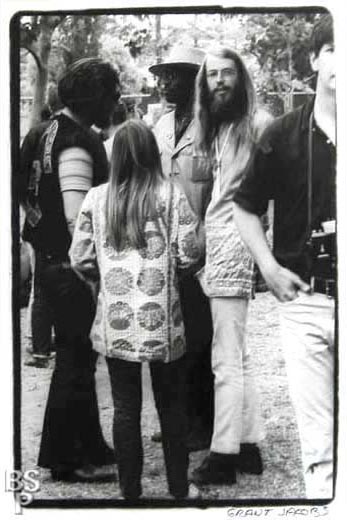
Jackson Browne, Tuli Kupferberg, Stefan Grossman, and Steve Noonan, 1967
In the mid-'60s, Noonan had been hailed by the Los Angeles magazine Cheetah as one of the "Orange County Three," a trio of singer/songwriters from the area to watch out for. One of the other three, Jackson Browne, became a superstar; the other, Tim Buckley, became one of the most esteemed cult rock singers of all time. Noonan, in contrast, is barely remembered at all. He did co-write a small hit single for the Nitty Gritty Dirt Band, "Buy Me for the Rain," with Greg Copeland in 1967, prior to his solo recording debut. Copeland, indeed, figured strongly in the Steve Noonan album, co-writing five of its songs with .Noonan, Copeland, and Browne were obviously tight in those days, as Copeland also did some co-writing with Browne, as on "The Fairest of the Seasons," which was recorded in the late '60s by Nico. It was to little avail for Noonan's commercial prospects, however, as his album must have sold little, judging by how hard it is to locate a copy today.
@^V^@

in this video montage long time friend of Jackson Browne singer/songwriter Steve Noonan gives a live (audio only)performance from 1974 of his hit song co written with Greg Copeland for the Nitty Gritty Dirt Band "Buy For Me The Rain". features clips of Jackson Browne...


Back cover of the Elektra LP 1968 - Photo taken by Linda Eastman (would be McCartney)

Like several low-selling 1960s folk-rock albums on the Elektra label (as with another self-titled 1968 LP, Eclection, by an artist who only put out one full-length recording), it has escaped reissue in the CD age. ~ Richie Unterberger, All Music Guide

Very young and trying to look (and sound) like Bob (as so many others were at the time) 1965-6
Thanx to steve for pics :Steve Noonan on MySpace Music
enjoy!
(and dont forget to buy the new album)

Add To Facebook

Σάββατο 8 Νοεμβρίου 2008

Mercedes Sosa - Corazon Libre - 2005 (Argentina Folk Traditional)

Mercedes Sosa (born July 9, 1935) is an Argentine singer immensely popular throughout Latin America. With her roots in Argentine folk music, she became one of the preeminent exponents of nueva canción. Sosa is nicknamed "La Negra" by her fans for her long, jet-black hair. She is best known as the voice of the "voiceless ones". Sosa was born in San Miguel de Tucumán, in the northwestern province of Argentina, of mestizo descent from French and Amerindian (Quechuan) ancestry. In 1950, at age fifteen, she won a singing competition organized by a local radio station and was given a contract to perform for two months.
Sosa and her first husband, Manuel Oscar Matus, with whom she has one son, were key players in the mid-60s nueva canción movement (which was called nuevo cancionero in Argentina). Her first record was Canciones con Fundamento, a collection of Argentine folk songs.
In 1967, Sosa toured with great success the United States and Europe. In subsequent years, she performed and recorded extensively, broadening her repertoire to include material from throughout Latin America.
In the early 1970s, Sosa released two concept albums in collaboration with composer Ariel Ramírez and lyricist Félix Luna: Cantata Sudamericana and Mujeres Argentinas (Argentine Women). She also recorded a tribute to Chilean poet Violeta Parra.
A supporter of Perón in her youth, she has favored leftist causes throughout her life. After the military junta of Jorge Videla came to power in 1976, the atmosphere in Argentina grew increasingly oppressive. At a concert in La Plata in 1979, Sosa was searched and arrested on stage, along with the attending crowd. Banned in her own country, she moved to Paris and then to Madrid. Her second husband died in 1978.
Sosa returned to Argentina in 1982, several months before the military regime collapsed as a result of the Falklands War, and gave a series of concerts at the Opera theater in Buenos Aires, where she invited many of her younger colleagues to share the stage. A double album of recordings from these performances became an instant best seller.
In the following years, Sosa continued to tour both in Argentina and abroad, performing in such venues as the Lincoln Center, Carnegie Hall and the Mogador in París.
Sosa's repertoire continued to broaden, and she made recordings in various styles. She collaborated frequently with many musicians such as Luciano Pavarotti, Sting, Lucio Dalla, Nana Mouskouri, Joan Baez, Andrea Bocelli, Silvio Rodríguez, Pablo Milanés, Milton Nascimento, Caetano Veloso, Chico Buarque, Gal Costa, Gian Marco, Konstantin Wecker, Nilda Fernández, Pata Negra, David Broza, Franco Battiato, Luz Casal, Ismael Serrano, Shakira.
Sosa participated in a 1999 production of the Misa Criolla by Ariel Ramírez.
She opposed the Argentine president Carlos Menem who was in office from 1989 to 1999. She supported the election of Néstor Kirchner who became president in 2003.
Sosa is UNESCO Goodwill Ambassador for Latin America and the Caribbean. She has won the Latin Grammy Award for Best Folk Album in 2000 ("Misa Criolla"), 2003 ("Acústico") and 2006 ("Corazón Libre"), as well as many international awards.
Sosa's song Balderrama is featured in the trailer for the movie Che, starring Benicio Del Toro.


Add To Facebook

Σάββατο 1 Νοεμβρίου 2008

Stefan Grossman - (p)1977-78 - How to Play Blues Guitar -Various Artists (C)Shanachie Records1990)


* re-released 1990 on Shanachie CD 98001/2 "How To Play Blues Guitar"
This Cd album not be confused with the same title of Elektra EKL-324rec. 1966 by Stefan Grossman , Peter K. Siegel & Rory Block as 'Sunshine Kate'


*This is a collection of the 1977 Country Blues Guitar Festival album
Kicking Mule 145 [US]= Sonet SNKF 129 [UK]= Sonet 69056 [D]
& 1978 How To Play Blues Guitar, Vol. 2 album
Kicking Mule KM 151 [US]= Sonet SNKF 148 [UK]

Biography
Guitarist, educator and historian Steffan Grossman was a student of acoustic blues and gospel singer/guitarist Rev. Gary Davis. Beginning when he was 15, Grossman studied with Davis on weekends, spending eight to ten hours at his house in Harlem, absorbing all he could. After studying with Davis for eight years in high school and college, he learned and studied with other country blues guitarists: Mississippi John Hurt, Son House, Skip James, Mance Lipscomb and Fred McDowell. Other early influences for Grossman included Elizabeth Cotten, Sam McGee, Willie Brown and Charley Patton.

In the early 1960s, Grossman formed the Even Dozen Jug Band and worked with the political rock band the Fugs before moving to Great Britain. In 1968, he co-founded Kicking Mule Records with Ed Denson, a label that showcased idiosyncratic acoustic blues and folk guitar styles. The co-founders dissolved their partnership in the mid-1980s, but Kicking Mule's catalog was purchased by Fantasy Records. Some of the vinyl sides have seen the light of day on compact disc. From 1967 to the early 1980s, Grossman lived in Great Britain, where he carved a reputation on the European blues and folk festival circuit, playing with British-raised acoustic guitarists like John Renbourn and John Fahey.

Grossman's solo discography goes all the back to 1966, when he recorded How to Play Blues Guitar for Elektra Records. Since the early 1980s, when Grossman began a long relationship with Shanachie Records of Newton, NJ, he has toured infrequently, but recorded extensively. Recent albums include Northern Skies, Southern Blues (1997), as well as Love, Devils and the Blues (1992) Guitar Landscapes (1990) and Shining Shadows (1988) for the same label. Grossman's sessionography includes recordings with the Even Dozen Jug Band (which also included such future luminaries as John Sebastian, Maria Muldaur and David Grisman), as well as albums by Paul Simon, John Fahey, Charlie Musselwhite and Happy Traum. He also helped Shanachie launch their Guitar Artistry imprint series, which showcases such artists as himself, Renbourn and Traum.Based in northwest New Jersey, Grossman concentrates his efforts these days on running his instructional video business, Vestapol Videos. His videos feature guitarists from Merle Travis and Chet Atkins to Dave Van Ronk and Brownie McGhee. He remains one of the world's foremost authorities on acoustic blues guitar. ~ Richard Skelly, All Music Guide

Jackson Browne, Tuli Kupferberg, Stefan Grossman, and Steve Noonan, 1967
the tracks
1 Yonder Comes the Blues 5:25 2 Police Dog Blues 1:50 3 Easy Street 3:46 4 Ragtime Mama Blues 1:58 5 Corrina, Corrina 2:40 6 It You Haven't Any Hay, Don't Get on Down the Road 2:40 7 Man of My Own 3:15 8 Assassination of John Fahey 4:17 9 Moon Going Down 3:52 10 Ragged and Dirty 1:46 11 Crow Jane 1:50 12 Pallett on Your Dirty 2:22 13 Mississippi Blues No. 3 Traditional 3:27 14 New Pony Blues 3:03 15 You Got the Pocket Book, I Got the Key 1:48 16 Someday Baby 3:24 17 Juicy Lucy 2:53 18 Hard Time Killin' Floor Blues 4:02 19 Belzona Blues 3:21 20 Oh, Babe Ain't No Lie 3:09 21 Special Rider Blues 4:07 22 Weeping Willow 3:25 23 Wake up Mama 2:39


Sam Mitchell, Mike Cooper & Stefan Grossman
Released during the peak of the mid/late-'60s folk boom, Stefan Grossman's debut, How to Play Blues Guitar, finds a young guitarist paying his respects to the music that inspired him. A student of Reverend Gary Davis (and later Skip James and Mississippi John Hurt among others), Grossman learned his blues from the source. Here, his fluency is proven through a tour of country-blues melodies and themes from standard fare like "Corrina, Corrina" to three James numbers and Grossman originals rooted in the tradition. He is joined by an amicable cast of instrumentalists and vocalists that share the stage on the majority of the material. The most suited of the group is multi-instrumentalist Sam Mitchell who fleshes out Grossman's effortless, syncopated fingerpicking with ever pertinent melodies from his own mandolin, fiddle, and slide guitar. The vocal tracks that make up the bulk of the performances are fine, though rarely more than reverential, ranging from the authentic replications of Jo ...Ann Kelly to the dry but steady work of Mike Cooper and Mickey Baker. The notable exceptions are the contributions from Delta blues great Son House on "Yonder Come the Blues" and "New Pony Blues." Essentially a remake of "Walking Blues," the former proves that, over 30 years after he made his first recordings, the singer was still capable of wringing new emotions out of a well-worn theme. Occasional instrumentals represent Grossman's early attempts at incorporating the blues vernacular into a six-string style of his own. Though one might not know what to make of a title like "Assassination of John Fahey," the composition finds Grossman closest to achieving those ends. Though the album's 23 performances may fail to cohere as an album per se, they serve as a document of the guitarist's roots while pointing the way to his future explorations.(Nathan Bush, All Music Guide)@@@@@@@@@@@@@@@@@@@@@
Stefan Grossman plays "God Moves On The Water." Filmed in Sweden in 1972, this clip is from the DVD "Stefan Grossman: A Retrospective 1971-1995

more info at guitar videos
Mike Cooper & Stefan Grossman John Renbourn


Jo-Ann Kelly & Sam Mitchell


Jo Ann Kelly & Son House
the players:
Mickey Baker Guitar, Vocals
Mike Cooper Guitar, Vocals
Stefan Grossman Guitar, Producer
Son House Vocals
Jo Ann Kelly Vocals
Sam Mitchell Fiddle, Mandolin, Steel & Slide Guitar
John Renbourn Guitar
Paul Rowan Harmonica


Add To Facebook