Τετάρτη, 31 Οκτωβρίου 2007

Spencer Davies Group - i'm a man

http://

Τρίτη, 30 Οκτωβρίου 2007

Jeremy Dormouse "Toad" (Canadian Folk 1968)

Obscure folk LP with a transition sound from 60s coffee house into 70s downer/loner moves. Lost in time atmosphere and idiosynchratic singing and playing makes for a trip with a clear identity, yet the connection between the arrangements, vocal mannerisms and underlying tunes seems random and "for the hell of it", rather than conscious explorations. Some tracks work, others don't, and all over it's pretty inconsistent. Covers of Dylan, Cohen and Bo Diddley (!) come off more like insults than bold interpretations, while the Lynda Squires led take on "High Flying Bird" is pretty cool. Of the originals most is average contemporary folk, with a high-point in the only track not by "Dormouse" (Cris Cuddy) or Marcus Wattington, Don Tapscott's sublime "Just To Hear The Bells". The album is semi-acoustic with electric bass and occasional percussion. Oddly, the LP has a similar sound (minus the autoharp) and the precise same problems as the Folklords. The album was recorded in 1967, and precedes the Rejects LP sessions. The Hallucinations CD is titled 'The Toad Recordings' and shows traces of vinyl press noise and high-end distortion in a few spots.
01. Baby Blue (Bob Dylan)02. Young Face (Waddington)03. High Flying Bird (Wheeler)04. Portrait For Marianne (Cuddy)05. Just To Hear The Bells (Tapscott)06. Sometimes You Ain't Got Nothin Boy (Waddington)07. By The Way (Cuddy)08. I Need A Friend (Allen)09. Suzanne (Leonard Cohen)10. Believe Me (Waddington)11. October Morning (Cuddy)12. Small Man (Waddington)13. Who Do You Love (McDaniel)14. Apple Annie (Cuddy)

Κυριακή, 28 Οκτωβρίου 2007

Ptarmigan - Ptarmigan (Canadian Psych Folk1969)

Ptarmigan (with a small p) was formed in Vancouver B.C. in 1970 by Michael Bieling, James Lithgow and Glen Dias. Soon after the band’s formation Monte Nordstrom and Shawn Mullins were added to the line-up. The band performed in coffee houses and small venues around the Vancouver Island and Victoria areas and attracted the attention of world renowned American flautist Paul Horn who had just moved to B.C.


Musicians:
Glen Dias: Vocals, Recorders & Percussion
Monte Nordstrom: Vocals & Twelve String Guitar
Kat Hendrikse: Drums
Dave Field: Acoustic Bass
Richard Mayer: Electric Bass (The Island)
Peter Wheeler: Hand Drums
Paul Horn: Percussion

In 1971 the original line up fragmented reducing ptarmigan to the duo of Nordstrom and Dias. In 1972 the duo went to Ontario where they played some local clubs in Ottawa and Toronto making some impressive connections in the music industry , then headed back to Vancouver where they again met up with Paul Horn. Horn was so impressed by the duo’s music, he signed them to a publishing and recording contract.


Ptarmigan went into Canbase (Mushroom) Studios in Vancouver during the fall of 1972 and recorded some basic tracks that would eventually become the ptarmigan album. After the tracks were recorded it took Paul Horn nearly a year to sell the project to a label and in 1974 , Columbia Records of Canada released the self titled ptarmigan album.
The music on the album combined elements of jazz, folk and progressive rock.


Based around a flute, percussion and guitar interplay, the songs experience eastern influences, various moods, time changes and are rather simply structured yet complex in nature. Based around themes of nature and musical landscapes today the music could be classified as new age or environmental.
When the album was originally released in 1974 it did not sell well at all because of its non-commercial sound but over the years it has become a collectors item especially for progressive rock fans.

This is the first legitimate reissue of the Columbia album entirely done by band member Monte Nordstrom on his own GrooveDigger label. This limited edition, remastered version of the album features the original artwork along with four bonus tracks and a detailed booklet that contains band photos, as well as an in depth essay on the band and the recording of the album.

his folk/jazz Westcoast acoustic recording predates New Age and Worldbeat by a decade. Eerie & introspective. Originally on Columbia of Canada. Now a Prog/cult item. In 1970, Monte Nordstrom was invited by singer/recorder player, Glen Dias to join the Vancouver Island ensemble, 'Ptarmigan'. The following year, Dias & Nordstrom toured Canada writing & performing new music on the coffeehouse circuit between Victoria's Queequeg, Winnipeg's Ting Tea Room & Ottawa's le Hibou. The highlight of this tour was in Ottawa when the duo spent two weeks opening for the legendary guitarist, Lenny Breau. Performing two shows per night for two weeks & socializing with Lenny was a highly influential experience for Monte. In 1972-73, international jazz master, Paul Horn produced the music of Ptarmigan at Mushroom Studio in Vancouver. Columbia Records released the Ptarmigan LP in early 1974. The launch of the Ptarmigan release was at The Egress nightclub in Vancouver, where Nordstrom & Dias spent a week opening for the Paul Horn Quintet. The duo last performed together in 1978 at the Midsummer Affair festival. Ptarmigan was a very unusual & noncommercial music that was ahead of its time. The ethereal ambience of Nordstrom & Dias' compositions continue to impress a wide spectrum of people. A bootleg European release on vinyl in the 80s created a cult following in the Progressive rock genre. In response to this continuing interest, the authorized Ptarmigan CD is re-issued through this website.
Produced by Paul Horn for VIP Ltd. (Vancouver Island Productions)Recording Engineer: Keith Stein. Mixed by Paul Horn & Keith Stein Cover Art & Photo: Glen Dias. Ptarmigan Logo: James NorquayAll songs composed by: Glen Dias & Monte NordstromPublished by Samadhi Music, BMI; Northstream Music/SOCAN & Bear Bones Music/SOCANRecorded at Canbase (Mushroom) Studios, Vancouver, Canada Musicians: Glen Dias: Vocals, Recorders & Percussion Monte Nordstrom: Vocals & Twelve String Guitar Kat Hendrikse: Drums Dave Field: Acoustic Bass Richard Mayer: Electric Bass (The Island)Peter Wheeler: Hand Drums Paul Horn: Percussion
This Re-Issue is dedicated to David Aston
1: rise (:24)
2: Go Dancing (5:16) - mp3 - 1123.kb The Island - mp3 - 1479.kb
3: (pt 1) intro (1:58)
4: (pt 2) preamble (:37)
5: (pt 3) main theme (6:29) Vancouver
6: (pt 1) reflections (2:54)
7: (pt 2) the city (2:39) Night of the Gulls
8: (pt 1) on the water (:51)
9: (pt 2) on the wind (3:10) A Hymn to the Ocean & A Great Northern Lake
10: (pt1) ocean song (6:17) - mp3 - 1271.kb
11: (pt 2) afternoon rain (:48)
12: - Coquihalla (9:43)

Bonus Track:
"Midsummer Affair" (1978; from GDR44 "Silhouette of Our Insanity")
13: Chimborazo (Nordstrom) (7:00) Monte Nordstrom: Vocal, Guitar; Glen Dias: Shaker
14: Chimborazo - studio tag (1:38) Michael Bieling: Congas; Raymond Bruvold: Bass; Dave Rowse: Sax; Barry Dayman: Flute/Mandolin; Jim Shain: Guitar/PhoTron
13: Engineered by Greg Pauker
14: Engineered by Ed deBree;
Produced by Monte Nordstrom
Re-mastered at Media Magic, Victoria, BC by Mark Franklin & Monte Nordstrom.
Thanks to Paul Horn!Graphics, Layout & Digital Photo
Edits by Barry Newman: www.cvnet.net/cosmic
Booklet Art Direction, Text, Titles & Design by Monte Nordstrom 1999 Groovedigger Records, Box 196 Crofton, BC, CANADA, V0R 1R0Website: http://www.montenordstrom.com/


Ptarmigan_-_Ptarmigan__Psych_Folk_Canada_-_vinyl_1969_.rar

Σάββατο, 27 Οκτωβρίου 2007

Odetta - Odetta Sings Folk Songs (US Protest Folk 1963)

Janis Joplin - "Janis spent much of her adolescence listening to Odetta, who was also the first person Janis imitated when she started singing".Bob Dylan, who said, "The first thing that turned me on to folk singing was Odetta. I heard a record of hers [Odetta Sings Ballads and Blues] in a record store, back when you could listen to records right there in the store. Right then and there, I went out and traded my electric guitar and amplifier for an acoustical guitar, a flat-top Gibson. ... [That album was] just something vital and personal. I learned all the songs on that record. It was her first and the songs were- 'Mule Skinner', 'Waterboy', 'Jack of Diamonds', ''Buked and Scorned'' In 1965, Odetta recorded an album of Dylan covers, Odetta Sings Dylan.
Joan Baez said "Odetta was a goddess. Her passion moved me. I learned everything she sang''

Odetta was born on New Year's Eve 1930 in Birmingham, AL. By the time she was six years old, she'd moved with her younger sister and mother to Los Angeles. She showed a keen interest in music from the time she was a child, and when she was about ten years old, somewhere between church and school, her singing voice was discovered. Odetta's mother began saving money to pay for voice lessons for her, but was advised to wait until her daughter was 13 years old and well into puberty. Thanks to her mother, Odetta did begin voice lessons when she was 13. She received a classical training, which was interrupted when her mother could no longer afford to pay for the lessons. The puppeteer Harry Burnette interceded and paid for Odetta to continue her voice training. When she was 19 years old, Odetta landed a role in the Los Angeles production of Finian's Rainbow, which was staged in the summer of 1949 at the Greek Theatre in Los Angeles. It was during the run of this show that she first heard the blues harmonica master Sonny Terry. The following summer, Odetta was again performing in summer stock in California. This time it was a production of Guys and Dolls, staged in San Francisco. Hanging out in North Beach during her days off, Odetta had her first experience with the growing local folk music scene. Following her summer in San Francisco, Odetta returned to Los Angeles, where she worked as a live-in housekeeper. During this time she performed on a show bill with Paul Robeson. In 1953, Odetta took some time off from her housecleaning chores to travel to New York City and appear at the famed Blue Angel folk club. Pete Seeger and Harry Belafonte had both taken an interest in her career by this time, and her debut album, The Tin Angel, was released in 1954. From this time forward, Odetta worked to expand her repertoire and make full use of what she has always termed her "instrument." When she began singing, she was considered a coloratura soprano. As she matured, she became more of a mezzo-soprano. Her experience singing folk music led her to discover a vocal range that runs from coloratura to baritone.Odetta's most productive decade as a recording artist came in the 1960s, when she released 16 albums, including Odetta at Carnegie Hall, Christmas Spirituals, Odetta and the Blues, It's a Mighty World, and Odetta Sings Dylan. In 1999 she released her first studio album in 14 years, Blues Everywhere I Go. Vanguard Records has released two excellent Odetta compilations: The Essential Odetta (1989) and Best of the Vanguard Years (1999). On September 29, 1999, President Bill Clinton presented Odetta with the National Endowment for the Arts' Medal of the Arts, a fitting tribute to one of the great treasures of American music. The next few years found Odetta releasing some new full-length albums, including Livin' with the Blues and a collection of Leadbelly tunes, Looking for a Home. She toured North America, Latvia, and Scotland during this time and was mentioned in Martin Scorsese's 2005 documentary, No Direction Home. That same year Odetta released Gonna Let It Shine, which went on to receive a 2007 Grammy nomination for Best Traditional Folk Album. ~ Philip Van Vleck, All Music Guide

Cold Mountain - The Soundtrack (2003)


The Cold Mountain soundtrack shares producers (T Bone Burnett) with the soundtrack for O Brother Where Art Thou, a largely old-time and folk album with limited radio play that still enjoyed commercial success, and garnered a Grammy. As a result, comparisons were drawn between the two albums. The Cold Mountain soundtrack, however, also employs many folk and blues elements. It features songs written by Jack White of The White Stripes (who also appeared in the film in the role of Georgia), Elvis Costello, and Sting. Costello and Sting's contributions, "The Scarlet Tide" and "You Will Be My Ain True Love", were both nominated for the Academy Award for Best Original Song and featured vocals by Bluegrass singer Alison Krauss. Gabriel Yared's Oscar-nominated score is represented by four tracks amounting to approximately fifteen minutes of music.


Petersburg Crater Union Trench

Η υπόθεση της ταινίας είναι λίγο πολύ γνωστή. Η Ada Monroe (Kidman), μια γυναίκα με καλή ανατροφή φτάνει μαζί με τον πατέρα της (Sutherland) στην μικρή πόλη Cold Mountain. Εκεί γνωρίζει τον Inman (Law), έναν απλό εργάτη αλλά η γνωριμία τους διακόπτεται από τον εμφύλιο πόλεμο, μιας που ο Inman αναγκάζεται να καταταχθεί. Μετά από 3 χρόνια στο μέτωπο ο Inman, αηδιασμένος αποφασίζει να λιποτακτήσει και να επιστρέψει στην Ada, η οποία στο μεταξύ έχει χάσει τον πατέρα της και έχει βρει στήριγμα στην εργατική χωριατοπούλα Ruby (Zellweger).


Petersburg Seige


The poster

Ο Minghella ξεκινάει την ταινία θορυβωδώς, με κάτι που θα μπορούσε να χαρακτηριστεί σαν η Omaha Beach του Αμερικάνικου εμφυλίου, μια μάχη - φεστιβάλ ωμότητας, που από την πρώτη στιγμή βάζει τις βάσεις για την εξέλιξη του χαρακτήρα και τις επιλογές του Inman.

Petersburg Crater Explosion Waud


Μετά την λιποταξία του Inman παρακολουθούμε παράλληλα το ταξίδι του προς το Cold Mountain και τον αγώνα της Ada να αντεπεξέλθει σε μια ζωή την οποία δεν έχει μάθει. Κάπου εδώ, σε μια ατελείωτη σειρά επεισοδίων εντοπίζεται και το σοβαρότερο πρόβλημα του φιλμ, το οποίο πάσχει από έλλειψη συνοχής, μιας που η εντύπωση ότι βλέπουμε ένα απλό κολάζ από σκετσάκια είναι έντονη, μιας που η φόρμουλα είναι «Ο-Inman-πάει εκεί-συναντά-αυτόν» και πάλι απ την αρχή. Αποπροσανατολιστικό από μια άποψη μπορεί να θεωρηθεί και το (εξαιρετικό) καστ, με πολλούς ηθοποιούς που είναι ειδικευμένοι σε δεύτερους ρόλους (Winstone, Ribisi, Baker, Gleeson, Philip Seymour Hoffman), που αν μη τι άλλο δε χάνουν την ευκαιρία να τραβούν την προσοχή επάνω τους με πολύ καλές ερμηνείες. Ιδιαίτερα καλός στο ρόλο του αδίστακτου Teague (που εποφθαλμιά την ακίνητη περιουσία της Ada - ένα είδος μνηστήρα, μια που το όλο ταξίδι του Inman «μυρίζει» Οδύσσεια) ο Winstone, ενώ ξεχωρίζουν στους μικρούς τους ρόλους οι Hoffman και Natalie Portman. Όσο για τους πρωταγωνιστές, οι οποίοι έχουν προετοιμαστεί καλά για τους ρόλους τους (συμπεριλαμβανομένης και της - ενοχλητικής - προφοράς), ο Law εκφράζει τον Inman σε κάθε του κίνηση και έκφραση, ενώ η Zellweger ερμηνεύει σχεδόν υπερβολικά την υπερ-ενεργητική Ruby. Η λαμπερή Kidman αρκείται σε έναν άχρωμο όσο και κοινότυπο ρόλο, αυτόν της ευάλωτης γυναίκας την οποία αλλάζει η σκληρότητα της ζωής, ο οποίος δεν της αφήνει και πολλά περιθώρια για Οσκαρική ερμηνεία.(http://www.cine.gr/film.asp?id=704124&page=4 )


Petersburg VA 1865

Cold_Mountain__2003__Soundtrack___256kb_.part1.rar

Cold_Mountain__2003__Soundtrack___256kb_.part2.rar

Jo Ann Kelly - Jo Ann Kelly (Epic Rec.1969)


The rock era saw a few white female singers, like Janis Joplin, show they could sing the blues. But one who could outshine them all -- Jo Ann Kelly -- seemed to slip through the cracks, mostly because she favored the acoustic, Delta style rather than rocking out with a heavy band behind her. But with a huge voice, and a strong guitar style influenced by Memphis Minnie and Charley Patton, she was the queen.


What Color Is Blues?


Born January 5, 1944, Kelly and her older brother Dave were both taken by the blues, and born at the right time to take advantage of a young British blues scene in the early '60s. By 1964 she was playing in clubs, including the Star in Croydon, and had made her first limited-edition record with future Groundhogs guitarist Tony McPhee. She expanded to play folk and blues clubs all over Britain, generally solo, but occasionally with other artists, bringing together artists like Bessie Smith and Sister Rosetta Tharpe into her own music. After the first National Blues Federation Convention in 1968 her career seemed ready to take flight. She began playing the more lucrative college circuit, followed by her well-received debut album in 1969. At the second National Blues Convention, she jammed with Canned Heat, who invited her to join them on a permanent basis. She declined, not wanting to be a part of a band -- and made the same decision when Johnny Winter offered to help her. Throughout the '70s, Kelly continued to work and record solo, while also gigging for fun in bands run by friends, outfits like Tramp and Chilli Willi -- essentially pub rock, as the scene was called, and in 1979 she helped found the Blues Band, along with brother Dave, and original Fleetwood Mac bassist Bob Brunning. The band backed her on an ambitious show she staged during the early '80s, Ladies and the Blues, in which she paid tribute to her female heros. In 1988, Kelly began to suffer pain. A brain tumor was diagnosed and removed, and she seemed to have recovered, even touring again in 1990 with her brother before collapsing and dying on October 21. Posthumously, she's become a revered blues figure, one who helped clear the path for artists like Bonnie Raitt and Rory Block. But more than a figurehead, her recorded material -- and unreleased sides have appeared often since her death -- show that Kelly truly was a remarkable blueswoman. ~ Chris Nickson, All Music Guide
Jo Ann Kelly & Son House

Earl Hooker - Sweet Black Angel (1970)

Earl Hooker (January 15, 1929April 21, 1970)
was an American blues guitarist.
Born Earl Zebedee Hooker in Clarksdale, Mississippi, his impoverished family moved to Chicago, Illinois when he was still an infant. Influenced by parents and relatives who played music, he was a cousin of John Lee Hooker and began playing guitar as a teenager.
An instrumentalist, within a few years Hooker put together a band that toured the United States and made some of his first recordings for Sam Phillips at Sun Studios in Memphis, Tennessee. He eventually became an important part of the Chicago blues scene. Hooker played in the American Folk Blues Festival in England in 1969. Although he never received the public recognition to the same extent as some of his contemporaries, Jimi Hendrix proclaimed Earl Hooker as the "master of the wah-wah" and his talent was greatly respected by other notable musicians such as B.B. King, Ike Turner, Junior Wells, and Buddy Guy. Hooker played slide guitar on the 1962 Muddy Waters recording, "You Shook Me." He was the only slide player on a Muddy Waters recording besides Muddy himself. Hooker also helped popularized the double-neck guitar.
Earl Hooker died at the age of 41 after a lifelong struggle against tuberculosis, which is alluded to in the title of a 1972 compilation album of his work, "There's a Fungus Among us." He was interred in the Restvale Cemetery in Alsip, Illinois. His story was told in a 2001 book by author Sebastian Danchin titled Earl Hooker, Blues Master.
Although, Earl Hooker died in 1970, his music still continues on in the rock band Daphne Blue, which includes Freddie Roulette , the original Lap Steel guitar player from Hooker's band, and his songwriting partner, Ray Bronner.

Biography

If there was a more immaculate slide guitarist residing in Chicago during the 1950s and '60s than Earl Hooker, his name has yet to surface. Boasting a fretboard touch so smooth and clean that every note rang as clear and precise as a bell, Hooker was an endlessly inventive axeman who would likely have been a star had his modest vocal abilities matched his instrumental prowess and had he not been dogged by tuberculosis (it killed him at age 41). Born in the Mississippi Delta, Hooker arrived in Chicago as a child. There he was influenced by another slide wizard, veteran Robert Nighthawk. But Hooker never remained still for long. He ran away from home at age 13, journeying to Mississippi. After another stint in Chicago, he rambled back to the Delta again, playing with Ike Turner and Sonny Boy Williamson. Hooker made his first recordings in 1952 and 1953 for Rockin', King, and Sun. At the latter, he recorded some terrific sides with pianist Pinetop Perkins (Sam Phillips inexplicably sat on Hooker's blazing rendition of "The Hucklebuck"). Back in Chicago again, Hooker's dazzling dexterity was intermittently showcased on singles for Argo, C.J., and Bea & Baby during the mid-to-late '50s before he joined forces with producer Mel London (owner of the Chief and Age logos) in 1959. For the next four years, he recorded both as sideman and leader for the producer, backing Junior Wells, Lillian Offitt, Ricky Allen, and A.C. Reed and cutting his own sizzling instrumentals ("Blue Guitar", "Blues in D-Natural"). He also contributed pungent slide work to Muddy Waters' Chess waxing "You Shook Me". Opportunities to record grew sparse after Age folded; Hooker made some tantalizing sides for Sauk City, Wisconsin's Cuca Records from 1964 to 1968 (several featuring steel guitar virtuoso Freddie Roulette). Hooker's amazing prowess (he even managed to make the dreaded wah-wah pedal a viable blues tool) finally drew increased attention during the late '60s. He cut LPs for Arhoolie, ABC-BluesWay, and Blue Thumb that didn't equal what he'd done at Age, but they did serve to introduce Hooker to an audience outside Chicago and wherever his frequent travels deposited him. But tuberculosis halted his wandering ways permanently in 1970. ~ Bill Dahl, All Music Guide

Josh White - Hard Time Blues (Political Folk Singer)


Bob Gibson & Shel Silverstein. (legendary folk singer Bob Gibson, and his equally renowned writing partner Shel Silverstein - both disciples of Josh White), in 1979, wrote and recorded a song tribute, "Heavenly Choir," to three of their most beloved artists, Josh White, Hank Williams and Janis Joplin....all brilliant artists, who had lived hard, fought hard, and died young. (the first verse is to Josh, followed by the chorus):


“ Last night I heard Josh White playing,
From somewhere on the other side.

In a orchard full of 'Strange Fruit' hanging,

With his head thrown back

He stood there singing.

He snapped those strings till his fingers bled,

He bent those notes till his guitar wept.

Now he's part of the Heavenly Choir,

Where all of the poor restless souls can be found.

Ain't that a Heavenly Choir?Ain't that a hell of a sound? ”


Copyright: Evil Eye Music/Melody Trails Music -BMI


Peter Yarrow: After Josh White's funeral, one of his dearest proteges, Peter Yarrow of Peter, Paul & Mary, eulogized him in the song "Goodbye Josh," which he included on his first solo album Peter. The song's lyrics are:

“ Goodbye Josh, goodbye old friend,
Your strings are quiet, the music ends.

What was it you said in a farewell to me?

Live it hard and then let it be.

Goodbye to Woody and to Cisco too,

Goodbye Leadbelly, and Josh, here's to you.

You filled a morning with sunshine and light,

Part of your songs are memories,

a part of my life.Oh, time to listen, time to share,

Time to remember, time to care,

After the thunder comes the rain,

And in the morning, it start all over again.

Goodbye Josh, goodbye old friend.

Goodbye Josh, and here's to you. ”
Copyright: Marybeth Music/WB Music Corp./ASCAP


Most blues enthusiasts think of Josh White as a folk revival artist. It's true that the second half of his music career found him based in New York playing to the coffeehouse and cabaret set and hanging out with Burl Ives, Woody Guthrie, and fellow transplanted blues artists Sonny Terry and Brownie McGhee. When I saw him in Chicago in the 1960s his shirt was unbuttoned to his waist à la Harry Belafonte and his repertoire consisted of folk revival standards such as "Scarlet Ribbons." He was a show business personality -- a star renowned for his sexual magnetism and his dramatic vocal presentations. What many people don't know is that Josh White was a major figure in the Piedmont blues tradition. The first part of his career saw him as apprentice and lead boy to some of the greatest blues and religious artists ever, including Willie Walker, Blind Blake, Blind Joe Taggart (with whom he recorded), and allegedly even Blind Lemon Jefferson. On his own, he recorded both blues and religious songs, including a classic version of "Blood Red River." A fine guitar technician with an appealing voice, he became progressively more sophisticated in his presentation. Like many other Carolinians and Virginians who moved north to urban areas, he took up city ways, remaining a fine musician if no longer a down-home artist. Like several other canny blues players, he used his roots music to broaden and enhance his life experience, and his talent was such that he could choose the musical idiom that was most lucrative at the time. ~ Barry Lee Pearson, All Music Guide
Josh_White_-_Hard_Time_Blues__192_.rar


Archie Shepp & Mal Waldron - Left Alone Revisited 2002


The Players

Archie Shepp (Sax (Soprano)), Archie Shepp (Sax (Tenor)), Archie Shepp (Vocals), Archie Shepp (Liner Notes), Mal Waldron (Piano), Mal Waldron (Liner Notes), Mal Waldron (Spoken Word),
Werner Aldinger (Producer), Mitchell Feldman (Photography), Mitchell Feldman (Project Manager), Michael Fitts (Executive Producer), Philippe Teissier Du Cros (Engineer), Philippe Teissier Du Cros (Mastering)

The Review

Mal Waldron's first tribute to Billie Holiday, titled Left Alone, was recorded in 1959, mere months before the singer's death. He returned to salute the legendary vocalist on several occasions since then, with this CD likely being his final tribute, recorded less than a year before his own death. Waldron, who worked with Holiday during her last years, is intimately familiar with her takes of the six standards heard on this disc, along with her own "Lady Sings the Blues." Archie Shepp's often gritty tenor sax is reminiscent of the texture of Holiday's voice, yet he perfectly complements Waldron's lush piano. They also pack a punch with their stark performance of "Left Alone" (Shepp's occasional reed squeaks seem deliberate, as if to imitate breaks in her voice). Waldron also recites Holiday's lyrics set to his composition at the conclusion of the CD. Shepp switches to soprano sax for an emotional take of "Everything Happens to Me" and "I Only Have Eyes for You," with the latter song sounding as if the unheard singer is being ignored by her love interest. Shepp's "Blues for 52nd Street" is both sassy and swinging. This instrumental salute to Billie Holiday is one of the best albums ever to honor her memory. ~ Ken Dryden, All Music Guide


The Songs


01. Easy Living 5:58

02. Nice Work if you can get it 4:28

03. Everything Happens to me 5:49

04. Left Alone 9:09.

05.When your Lover Has Gone 5:36

06. I Only Have Eyes For You 7:05

07. Blues For 52nd Street 5:25

08. Porgy 8:41

09. Lady Sings The Blues 3:39

10. Left Alone (spoken Lyrics) 0:52

Bob Dylan Highway 61 Revisited Tribute

http://

Electric Flag Live At Monterey Pop Fest 1967

"Drinkin' Wine" perfomed by Nick 'The Greek' Gravenites & The Electric Flag at Monterey 1967. Awesome solo by Mike Bloomfield.


http://

Quicksilver Messenger Service At Monterey Pop Fest 1967

Monterey pop festival, incredible film of "All I ever wanted to do"extract from "Monterey Pop"
with the first line - up with Jim Murray

http://

Homegas - Homegas (Folk Blues US 1970 Takoma Rec.)


HOMEGAS
Released on Takoma records in 1970 (C1026) and produced by John Fahey. This self titled release is the only output of this rural community based in Indiana.
Led by Peter Aceves, it's an excellent example of folk-blues with good vocals and strong instrumental parts. The songs are all original and some are really outstanding, notably Bumblebee, Bulldozer Blues and Maine. The liner notes mention that two other (unknown) groups used to play with Homegas: Greazy Green and Stoney Lonesome before their house was destroyed by fire. Fuzz, Acid & Flowers

Personnel:

PETER ACEVES vcls, gtr, rack harp

JIM BARDEN hand harp

RICHARD BLAUSTEIN fiddle

DAVE BROCK hand harp

JOHN HYSLOP bs

NEIL ROSENBERG mandolin, banjo

DAVE SATTERFIELD vcls

HOMEGAS has never been reissued on cd and this rip has quite a bit of surface noise that doesn't detract from the music at all. (at least for us here at GSU)
The playing is strong throughout and is rooted in pre-war acoustic blues and rural string bands while the vocals remind me of a U.S. Incredible String Band.

Hamhock & Slide with Skibo Demon

http://

Hamhock & Slide with Skibo Demon live at Farm to Family Moonlight Festival Alachua Florida 3/03/07

Pharoah Sanders - Welcome To Love (1990 Timeless Rec.)


When this was first released, the slow, straight sounds of Pharoah Sanders on a series of mostly famous ballads came as a bit of a surprise to some. Others saw Sanders as following the road of his mentor, John Coltrane, who had recorded most of these tunes himself. In retrospect, the inside playing of Sanders is less of a surprise, the saxophonist having followed that path regularly since at least the '80s. This performance has held up well through the years, and while the thin, reserved approach is reminiscent of Coltrane, it is still marked with Pharoah's print. The competent and thoroughly professional rhythm section of pianist William Henderson, bassist Stafford James, and drummer Eccleston W. Wainwright takes a decidedly reserved cue from the saxophonist, but each song is infused with a subtle emotional quality that simply does not let go. ~ Steven Loewy, All Music Guide


Credits

Stafford James (Bass), Pharoah Sanders (Sax (Soprano)), Pharoah Sanders (Sax (Tenor)), Pharoah Sanders (Main Performer), Makoto Kimata (Executive Producer), Derek Richardson (Liner Notes), Tetsuo Hara (Producer), Russ Musto (Assistant Director), Eccleston W. Wainwright, Jr. (Drums), Eccleston W. Wainwright, Jr., R. Andrew Lepley (Photography), Bill Henderson (Piano), Max Ballman (Engineer), Franck Gardies (Assistant Engineer)

Τετάρτη, 24 Οκτωβρίου 2007

Harvey 'the snake' Mandel - Live At The Matrix Club - Frisco 1968


Harvey Mandel became the original guitarist with Charlie Musselwhite, releasing the debut album Stand Back! in 1966. As a result of heavy airplay in San Francisco, they were invited to play The Fillmore by Bill Graham. Mandel moved to the Bay Area, regularly performing at the infamous club "The Matrix", where local favorites like Jerry Garcia, Elvin Bishop and Jefferson Airplane would sit in and jam.
On meeting the record producer Abe Kesh, Mandel was able to release his first solo album for Mercury Records entitled, Cristo Redentor in 1968, which included his version of "Wade in the Water."


In July 1969 he replaced Henry Vestine as lead guitarist in the blues band Canned Heat. Harvey remained with Canned Heat for nine months (until April 1970) with slide guitarist/vocalist Alan Wilson and singer Bob "The Bear" Hite. The custom of Canned Heat suggested that each member of the band acquired a nickname upon joining the band. Harvey's nickname, "The Snake," was given to him years before by keyboardist Barry Goldberg in Chicago (attributed to his cracked leather jacket and "snake-like guitar licks"). After several tours and three albums, including Future Blues, he was recruited by British bluesman John Mayall to be a member of the Bluesbreakers, recording the album, entitled USA Union together.
The band featured Mandel with Canned Heat bassist Larry "The Mole" Taylor, and violinist Don "Sugarcane" Harris. Mandel also appeared on another significant Mayall album, Back To The Roots, on which Eric Clapton and Mick Taylor also guested. He also toured with Taylor and Harris under the name "Pure Food and Drug Act" and released one album before Harris was assaulted, effectively ending his career.
He resumed his solo career, releasing several more albums for Janus Records in the 1970s including Baby Batter, The Snake, and Shangrenade, the record where Harvey employed 2-handed fretboard tapping. Mandel was one of the first rock guitarists to utilize this technique, years before Eddie Van Halen and Stanley Jordan.
One of Mandel's most significant session credits was his participation on Black and Blue, the 1976 album by The Rolling Stones.
Following his stint with the Stones, he became a busy session player, with groups such as Love and The Ventures, and opened for Jeff Beck on his Canadian tour as a power trio with Jimmy Haslip, bassist for The Yellowjackets. He relocated to Chicago in the late 1970s and continued to tour extensively, as well as supporting groups such as Roxy Music. In 1980, Mandel relocated to Florida as a member of the house band at Ron Wood's Miami nightclub, "Woody's," with Rolling Stones attendant saxophonist, Bobby Keys.~
(BlackCatBone -Standin' At The Crossroads diary magazine)

In the mold of Jeff Beck, Carlos Santana, and Mike Bloomfield, Mandel is an extremely creative rock guitarist with heavy blues and jazz influences. And like those guitarists, his vocal abilities are basically nonexistent, though Mandel, unlike some similar musicians, has always known this, and concentrated on recordings that are entirely instrumental, or feature other singers. A minor figure most known for auditioning unsuccessfully for the Rolling Stones, he recorded some intriguing (though erratic) work on his own that anticipated some of the better elements of jazz-rock fusion, showcasing his concise chops, his command of a multitude of tone pedal controls, and an eclecticism that found him working with string orchestras and country steel guitar wizards. Mandel got his first toehold in the fertile Chicago white blues-rock scene of the mid-'60s (which cultivated talents like Paul Butterfield, Mike Bloomfield, and Steve Miller), and made his first recordings as the lead guitarist for harmonica virtuoso Charlie Musselwhite. Enticed to go solo by Blue Cheer producer Abe Kesh, Harvey cut a couple of nearly wholly instrumental albums for Phillips in the late '60s that were underground FM radio favorites, establishing him as one of the most versatile young American guitar lions. He gained his most recognition, though, not as a solo artist, but as a lead guitarist for Canned Heat in 1969 and 1970, replacing Henry Vestine and appearing with the band at Woodstock. Shortly afterward, he signed up for a stint in John Mayall's band, just after the British bluesman had relocated to California. Mandel unwisely decided to use a vocalist for his third and least successful Philips album. After his term with Mayall (on USA Union and Back to the Roots) had run its course, he resumed his solo career, and also formed Pure Food & Drug Act with violinist Don "Sugarcane" Harris (from the '50s R&B duo Don & Dewey), which made several albums. In the mid-'70s, when the Rolling Stones were looking for a replacement for Mick Taylor, Mandel auditioned for a spot in the group; although he lost to Ron Wood, his guitar does appear on two cuts on the Stones' 1976 album, Black & Blue. Recording intermittently since then as a solo artist and a sessionman, his influence on the contemporary scene is felt via the two-handed fretboard tapping technique that he introduced on his 1973 album Shangrenade, later employed by Eddie Van Halen, Stanley Jordan, and Steve Vai. ~ (Richie Unterberger, All Music Guide)

Τρίτη, 23 Οκτωβρίου 2007

Electric Flag - Carousel Ballroom San Francisco, May 1968


1968. May. Carousel Ballroom, San Francisco
Michael Bloomfield, guitar - Harvey Brooks, bass - Buddy Miles, drums, screams 2, vocals 3,6 - Barry Goldberg, organ, vocals 4? - Peter Strazza, tenor sax - Marcus Doubleday, trumpet - Nick Gravenites, vocals 5,7,8 percussion - Herbie Rich, baritone sax


1. “Opening Instrumental (1.34)2. “Instrumental” (3.56)3. “Texas” (5.43)4. “Hey Joe” (5.05)5. “It Takes Time” (6.47)6. “I've Been Loving You Too Long” (8.07)7. “Another Country” (2.04) cut short8. “Ain’t No Doctor” (3.21) fade in9. “Don't You Lie To Me” (7.07)10. “Soul Searching” (8.50)

This is the ultimate Electric Flag live-recording. True soundboard, but unfortunately there are some faint periods for the vocal, the guitar and so on, but nevertheless the best circulating live recording.
After a few distorted screams as microphone test, and a very short but fitting introduction “Here’s the incredible Electric Flag” the band starts with a beautiful sounding short opening instrumental, that’s even in stereo! You almost can’t believe it’s them, so good does they sound. And when you have listened to the audience recordings of Electric Flag live, this is almost too much.

MB is smoking – no, burning! - on (track 2) but this is unfortunately one of the two tracks where the guitar is too distant to really enjoy. “Texas” comes on fine with good vocals from Buddy Miles and good playing through out. The guitar is still a little too faint, but it’s fine to hear the hornsection play in tune and time! Midway through the track MB’s guitar is turned up and we can really enjoy a fine experience.
“Hey Joe” is apparently difficult to get started. The band doodles for a couple of minutes. Could it be Barry Goldberg singing? It does not sound like any of the other vocalists. MB plays at his best, low, soft and bluesy and high and hard. Buddy Miles is hammering away with all his might. A great track.
With (track 5) “It Takes Time” we’re back to the classic Flag repertoire. MB starts wailing on the guitar and Gravenites follows with a top vocal performance (a little faint in the recording. Midway the organ suddenly appears. Somebody must have had a busy time twistin’ the knobs). The guitar solo is great and it appears to be a “real” solo performance as you can’t hear any other instrument but Buddy’s whiskers and bass drum. Ah, that’s what we like to hear, MB grabbing the audience and the players, so they forget to play.
Again the band doodles, strums and discuss before they start (track 6). It has some fine interplay between the vocal and the guitar at the end. “Another Country” has as always a fine vocal from Gravenites and unfortunately the track is cut after only two minutes. The first part of (track 7) is also missing, but still it’s a gem (the title is a guess).
More doodling and then a beautiful version of “Don’t You Lie To Me” with MB singing and playing at his very best. Before the next track the band is discussing what to play! MB is yelling for “Brad, where’s Brad? A few more minutes?” and he wants to play “You Don’t Realize” (“we all know the parts to that”) but Gravenites is firm: Soul Searching! Maybe they should have played like MB wanted because it sounds like the band is falling apart here and there. MB delivers a fine solo anyway and he is yelling: “Funky boogaloo time!” all the way and he certainly is in charge of the playing.
“That’s it, The Electric Flag!” End of proceedings. Great show.
CD “SAN FRANCISCO NIGHTS VOL. 2 – DISC 5” Bootleg
Rene' Aagaard's Article

Electric Flag - 1968 - Live At Carousel Ballroom San Fransisco

Tour Dates (Local Area - Larisa City)

I. STAGE PERFORMANCES VENUE's Larisa City (Ex- B-Live Club)
http://www.myspace.com/stageperfomances
UPCOMING SHOWS
17 November 2007- SIGMATROPIC (ATH) 22:00


http://www.sigmatropic.gr/

18 November 2007- XEIMERINOI KOLYMBHTES 21:00
24 November 2007- LINK QUARTET (CESENA IT. ) + dj Henry (Milano Mods) 22:00
8 December 2007 - Down & Out (ATH) - A NO BUDGET EVENT- 22:00
11 January 2008 - The Vietnam Veterans ( FR ) 22:00

II. Blues Trackers Tour Dates

http://www.bluestrackers.gr/bio.htm
Sunday November 11, Mylos 1927 Larissa
SUPPORT TO GLEN HUDGES
~.~

Sigmatropic - Crack in the Back live

http://

Konstantinos Vita - Transformations(Tribute To Manos Hadjidakis)

Kωνσταντινος Βητα


Ο Κωνσταντίνος Βήτα γεννήθηκε στη Μελβούρνη της Αυστραλίας και μεγάλωσε στην Αθήνα. Παρακολούθησε μαθήματα κλασσικής κιθάρας και αρμονία, ενώ σπούδασε ζωγραφική και ιστορία τέχνης στην Μελβούρνη. Στην Αθήνα τελείωσε γραφικές τέχνες. Δούλεψε σαν γραφίστας και δημοσιογράφος σε περιοδικά.
Το 1992, ο Κωνσταντίνος Βήτα μαζί με τον Μιχάλη Δέλτα και τον Αντώνη Π. ίδρυσαν το συγκρότημα Στέρεο Νόβα. Μετά από πέντε χρόνια το συγκρότημα διαλύθηκε, αλλά τα μέλη του συνεχίζουν να δραστηριοποιούνται μέχρι και σήμερα ως μουσικοί, συνθέτες και παραγωγοί.
Ο Κωνσταντίνος Βήτα, παράλληλα με μια σειρά προσωπικών δίσκων και συναυλιών, έχει γράψει μουσική για το θέατρο, το χορό και τον κινηματογράφο. Έχει επίσης παρουσία και στα εικαστικά, με προσωπικές εκθέσεις και συμμετοχές.
Τον Οκτώβριο του 2005 παρουσιάστηκε στο κοινό η έκθεση Soundscapes του Κωνσταντίνου Βήτα, με περιεχόμενο βίντεο, φωτογραφίες και ζωγραφική, στο Κέντρο Σύγχρονης Τέχνης στη Θεσσαλονίκη.
Kι αν γεννηθείς κάποια στιγμή
Μιαν άλλη που δε θα υπάρχω
Μη φοβηθείς...
Εν μέσω καλοκαιριού, ο Σείριος παρουσιάζει την ηλεκτρονική ματιά του Κωνσταντίνου Βήτα στο υλικό του Μάνου Χατζιδάκι, στο νέο του label M41. 4 μοίρες Νότια του Σείριου λάμπει το Αστρικό Σμήνος Μ41, με περισσότερα από πενήντα αστέρια κι έναν γιγάντιο κόκκινο ήλιο στο κέντρο του, 2.500 έτη φωτός από τώρα. Τους θερινούς μήνες ο Ήλιος μας περνά ανάμεσα από το Σμήνος Μ41 και τον Σείριο. Ένα αστέρι που απεικονίζεται με δύο πρόσωπα: το ένα κοιτάζει αυτό που πέρασε, και το άλλο ότι είναι να έρθει, αυτό που μας τρομάζει, μας φοβίζει και μας συγκινεί. Αυτό που μας κρατά δεμένους και προκαλεί τα δεινά μας, αυτό που μας δίνει την ελπίδα και μας σηκώνει ψηλά...Transformations: Με σεβασμό που δεν απαγορεύει την αποδόμησή του, ο μουσικός ιστός του Μάνου Χατζιδάκι αντανακλάται μόνο μερικώς στη ραχοκοκαλιά των breaks, των ήχων, των συνθετητών, των loops του Κωνσταντίνου Βήτα. Σαν σκόρπια κομμάτια σπασμένου κεραμεικού που μένουν μετέωρα σε ριπές ηλεκτρονικού ανέμου, δημιουργώντας μια περίεργη αίσθηση γαλήνης που δεν δείχνει να κλονίζεται με τίποτα. Ο ίδιος ο Κ. Βήτα και οι Δήμητρα Γαλάνη, Φλέρυ Νταντωνάκη, Έλλη Πασπαλά, Γιώργος Ρωμανός και Βικτώρια Ταγκούλη αναλαμβάνουν το φωνητικό μέρος και τα αποτελέσματα είναι σχεδόν πάντα όμορφα, αν και πολύ φοβούμαι ότι για να ευχαριστηθεί κανείς αυτό το δίσκο, θα πρέπει να ξεχάσει εντελώς τις συγκινήσεις από το πρωτότυπο υλικό. Τα πάντα εδώ λειτουργούν ως αφορμές, ως samples για να απλώσει το δικό του μουσικό και ρυθμικό χαλί ο Κωνσταντίνος Βήτα. Άλλωστε, τι να πρωτοεπιλέξεις και πως να το αποδώσεις, μέσα σε ένα χάος από ήχους και στίχους του μεγάλου Έλληνα δημιουργού. Θα έλεγε κανείς ότι, παρά την αφορμή, το υλικό αυτό εξακολουθεί να απευθύνεται στο σταθερό κοινό του Βήτα και των Στέρεο Νόβα, σχεδόν αποκλειστικά -ο ήχος τουλάχιστον μοιάζει πεισματικά κολλημένος εκεί, όταν οι σκαπανείς του είδους στην Ελλάδα διαμόρφωναν μια ολόκληρη σκηνή. Κι έτσι, αυτό που μένει, ηχητικά τουλάχιστον, είναι ένα κάπως ρετρό ηλεκτρονικό περιβάλλον, όπου επιπλέουν -επιτυχημένα ή μη- εικόνες του Χατζιδάκι, σαν καρτ ποστάλ. Για τις κάνεις όμως φιλμάκι, χρειάζεται λίγη περισσότερη προσπάθεια -από μόνος σου. Κι εκεί θα ακούσεις το δίσκο όπως τουλάχιστον προσπάθησε να στο δώσει το ευαίσθητο μάτι του Βήτα. Θα κοιτάξεις τ'αστέρια που βλέπει και θα δεις πυροτεχνήματα συναισθημάτων που η συναισθηματική σου τσιμπήδα αρχικά έχασε. Θα ρουφήξεις τη μαγνητική αστρική λαγνεία των ποιητικών γεγονότων, των εικόνων. Θα εισχωρήσεις στην οσμή που τυλίγει την έμπνευση του δημιουργού και του μεταμορφωτή τους.Και την καρδιά σου θα έλξει τέτοια δύναμη που δεν θα υπάρχει χώρος για οτιδήποτε άλλο: Σαν ήχος σφυριχτός, σαν δυνατός βόμβος, σαν λάμψη από ατέλειωτα φανάρια τη νύχτα, σαν ταξίδι στο αστρικό σμήνος για να ξεφύγεις απ'ότι σε απασχολεί. Κι εσύ θα το βάζεις ξανά και ξανά, χωρίς να ακούς τίποτα συγκεκριμένο να σου υποβάλλει ιδέες και να εκβιάζει συναισθήματα, απλά για να χαθείς ανάμεσα σε κάτι γνώριμο και ζεστό για να σε προστατεύει, κι άγνωστο για να μην σε κρατάει στο έδαφος που σε καίει:
Και θα με βρεις είτε σαν άστρο
Όταν μονάχος περπατάς στην παγωμένη νύχτα
Είτε στο βλέμμα ενός παιδιού που θα σε προσπεράσει
Είτε στη φλόγα ενός κεριού που θα κρατάς
Διαβαίνοντας το σκοτεινό το δάσος...
(Τασος Βογιατζης - Αvopolis Music Network)

KONSTANTINOS__VITA_-_TRANSFORMATIONS__Transports_to_Manos_Hadjidakis_.rar

Lost In Translation - A Film By Sofia Coppola (The Soundtrack 2003)


Χαμενος στην ασυνεννοησια ενος πολιτισμου ,τον οποιο δεν μπορει (και δεν θελει να καταλαβει),μελαγχολικος & κυνικος movie star που βρισκεται στο Tokyo για το ευκολο χρημα της διαφημισης,την ωρα που, οπως παραδεχεται και ο ιδιος,'θα πρεπε να ειναι στην Νεα Υορκη και να παιζει θεατρο'.

Η απαθεια ενος ζωντανου - νεκρου, χαραγμενη μονιμως στο προσωπο του...
Οσο παραιτημενος απο τη ζωη δειχνει ο bob ,

τοσο διψασμενη για ζωη φαινεται να ειναι η charlot...

μια συναντηση ,αφετηρια για μια ασυνηθιστη σχεση, σχεση ελικρινειας...

Ηχητικα Τοπια ,Πολυχρωμα Μοναχικα - ενα Στομα γεματο Ανεκπληρωτες Επιθυμιες

και ματια που χασκουν στο κενο - φερνουν στο νου 'κεινο το Μαγικο Οχημα του Vinnie Reigly των μοναδικων DURUTTI COLUMN των αρχων του '80.

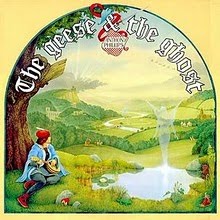
Anthony Phillips - "The Geese and the Ghost" 1977


Anthony Phillips "The Geese and the Ghost" 1977
Anthony Phillips was one of the founding members of Genesis, having attended the Charterhouse School in Surrey with Peter Gabriel, Tony Banks, and Michael Rutherford. Phillips and Rutherford (who had played together in another band before linking up with Gabriel and Banks), were the principal composing members of Genesis during their formative years, right into their first recording venture on English Decca ("Silent Sun" etc.) under the aegis of Jonathan King. Much of Phillips' and Rutherford's music was too subtle and introspective to work for the fledgling band on stage, and eventually composition became more of a shared effort. By the time the group cut its second album, Trespass, however, Phillips had receded into the background, propelled by a crippling onset of stage-fright that forced him out of the line-up following the album's release. His influence, ironically, was felt very strongly on their subsequent breakthrough third album, Nursery Cryme, the title track of which (the band's first number to attract a wide audience in progressive rock circles), for its introduction and opening minute, used material that Phillips had written and recorded (as a demo) as early as 1969.
Little more was heard from Anthony Phillips until 1977, when he favored us with his first solo album, The Geese and the Ghost, followed by Wise After the Event a year later, and then a collection of early demo recordings, Private Parts and Pieces, also issued in 1978. Phillips has re-emerged periodically, working in a style that is much closer to the classically influenced original Genesis sound than to the work of the current version of the group. He retains a cult of fans, similar in certain respects to Peter Banks of Yes (another guitar player who quit an art-rock band at a critical early juncture in their history), but recording more frequently. He also writes a considerable amount of music for television and movies, and remains a guitarist of supreme skill and confidence, steeped in classical, pre-Baroque, and folk influences, able to record entire albums featuring only his acoustic instrument. Phillips' skills on the keyboard, principally synthesizer and Mellotron, are more limited, and were never exploited within a group context, but his studio recordings reveal a distinctive character to his compositions on those instruments as well. ~ Bruce Eder, All Music Guide

Δευτέρα, 22 Οκτωβρίου 2007

Broselmachine - Broselmachine (German Psych Folk 1971)

Brφselmaschine - Brφselmaschine
One of the three legendary Pilz folk albums from the early 1970s German scene. Of the three, Brφselmaschine were certainly the most "folky". The five-piece lineup included primarily male and female vocals with acoustic guitar. As accents to various songs, the band added electric guitar, bass, hand percussion, flute, sitar, zither and mellotron.
The five minute opener "Gedanken" is a pleasant enough folk track with heavily accented English vocals and some nice electric guitar. "Lassie" follows and is just the sort of song that my Dad would enjoy. One gets the vision that Brφselmaschine would feel comfortable opening for comedian Bob Newhart at a place like the "hungry i" in San Francisco circa 1966. Plates and silverware clanking in the background and after the song completes, an uproarious crowd claps maniacally while cigarettes dangle from their lips. After the two minute acoustic guitar interlude "Gitarrenstuck", things begin to get interesting. "The Old Man's Song" starts with a repetitive and trance-like acoustic guitar. Hand percussion and wah guitar enter and some delicate flute sets the tone for the peaceful femme singing. The nine minute "Schmetterling" is one of the album's highlights and recalls Hoelderlin's Traum with its Eastern motif (sitar, tablas, flute) and German narration. Later in the song there's a wonderful driving bass guitar that gives the song a sense of contrasting urgency not found elsewhere. The album closes with "Bossa Nova" (8:06) a nice "stroll in the park" kind of song with emphasis on acoustic guitar, flute, wordless voice and hand percussion.
Overall, Brφselmaschine is the type of album to sooth ones nerves after a hard days work. Not particularly experimental or groundbreaking, but for fans of early Hoelderlin, Emtidi or other such cosmic folk bands, Brφselmaschine is a must pick up.
Tom Hayes 26-August-2001 --------------------------------------------------------------------------------
Solid German folk rock. The album is dominated by acoustic guitars, but flute, percussion, bass and some traditional instruments like zither are featured as well. The male and female vocals are beautiful and (mostly) in German. Very nice album, but not a classic.
Sjef Oellers 23-April-2001 --------------------------------------------------------------------------------
Albums
Broselmaschine 1971Peter Bursch & Die Broselmaschine 1976I Feel Fine 1978
Broselmaschine (Pilz 1971)Album Legnth: 35.44Recorded:August 1971 Dierks Studio - Stommeln, GermanyGenre: FolkBest Song: 'Schmetterling'Release Info: 1994 CD Reissue SPALAX 14882
Tracks: 1. Gedanken 5.062. Lassie 5.063. Gittarrenstuck 2.034. The Old Man's Song 5.265. Schmetterling 9.316. Nossa Bova 8.06 Overview:Quite possibly the pinnacle of Krautfolk, Broselmaschine is certainly tops in the folk subgenre and is recommended to those interested in the lighter side of Krautrock. Broselmaschine combines the highly talented acoustic guitar playing of Peter Bursch (a master of the instrument who has published many instructional books on the subject), romantic vocals, and a mild Eastern influence highlighted by the use of sitar and flute. The album begins with 'Gedanken', a peaceful track with a slight renaissance-era feel, the track features acoustic and electric guitar, flute and romantic lyrics. Next the group performs the Scottish traditional 'Lassie' with multi-tracked vocal harmonies. Next, 'Guitarrenstuck', is a beautiful piece played with folk guitar and a soothing female vocal. 'The Old Man's Song' seems slightly out of place due to its use of wah-wah peddle, but this gives way to some rather ominous sounding Duul-ish acoustic guitar and folk percussion. 'Schmetterling' introduces an Eastern flavor to the album and is most notable for its sitar which reminds me a little bit of mid-period Popol Vuh. Bursch's guitar playing on this track is simply masterful and the track is given and extra boost from some atmospheric mellotron. 'Bossa Nova' stands out as a folk masterpiece with its incredible guitar work, folk percussion, and female vocals. This track has a peaceful quality similar to Paradieswarts Duul, the only difference being the musical ability of Broselmaschines members. The album was produced by Rolf Ulrich Kaiser and engineered by Dieter Dierks and was first issued on Pilz in 1971.
Album Rating: 5 out of 5 [Doug]
Musicians:Lutz Ringer - Bass, MellotronPeter Bursch - Guitar, Vocals, Sitar, FluteJenni Schucker - Flute, VocalsWilli Kissmer - Vocals, GuitarMike Hellbach - Congas, Tablas, Mellotron

Futuro Antico - Dai Primitivi All'elettronica 1980


Futuro Antico Dai Primitivi All'elettronica 1980(Aktuala)


After the split of Aktuala,

Futuro Antico was a short lived collaboration between Walter Maioli and Riccardo Sinigaglia.The music on Dai Primitivi All'elettronica is a magical synthesis of ancient forms, moderm composition and primitive electronics.The songs are minimalist mantras using repetition and drones to great effect.
Dai Primitivi All'elettronica was privately released on cassette by Walter Maioli in 1980, later that same year it was re-released as an unauthorized bootleg LP.In 1990 Maioli reissued a remixed version as a limited edition LP (1000) copies. We'd like to give special thanks to hemptimes for this record.

Aktuala_-_1980_-_Futuro_Antico_-_Dai_Primitivi_all_Elettronica__Italy_ex-_Aktuala_May_1980_Psych_Fol

David Crosby - If I Could Only Remember My Name (1971)


DAVID CROSBY - If I Could Only Remember My Name
Tracklist
1. Music Is Love (Crosby/Nash/Young) - 3:16
2. Cowboy Movie (Crosby) - 8:02
3. Tamalpais High (At About 3) (Crosby) - 3:29
4. Laughing (Crosby) - 5:20
5. What Are Their Names (Crosby/Garcia/Lesh/Shrieve/Young) - 4:09
6. Traction in the Rain (Crosby) - 3:40
7. Song With No Words (Tree With No Leaves) (Crosby) - 5:53
8. Orleans - 1:56
9. I'd Swear There Was Somebody Here (Crosby) - 1:19

Guests
Graham Nash;
Joni Mitchell;
Neil Young;
Jerry Garcia;
Mickey Hart;
Michael Shrieve;
Jorma Kaukonen;
Jack Casady
Producer David Crosby

Personnel includes:
David Crosby (vocals, acoustic & electric guitars);
Graham Nash (vocals, guitar, piano);
Jerry Garcia (guitar, pedal steel guitar);
Neil Young (guitar, vibraphone, bass, congas, background vocals);
Jorma Kaukonen (guitar);
Paul Kantner (guitar);
Laura Allan (autoharp);
Greg Rolie (piano);
Jack Casady(bass)
Phil Lesh (bass);
Mickey Hart(drums, percussion);
Bill Kreutzmann,(drums, percussion);
Michael Shrieve (drums, percussion);
Joni Mitchell,(background vocals)
Grace Slick (background vocals).

Recorded at Wally Heider's, San Francisco, California.

For his highly anticipated 1971 solo debut, David Crosby recorded a unique, eclectic, and willfully expansive album. The cream of 1970s California rock is assembled here, with the various celebrities joining together in an organic, collective approach that's embodied by the opening, free-spirited jam of "Music Is Love." Throughout the record, Crosby moves from the sauntering shuffle of "Cowboy Movie" to the wondrously spiritual harmonies of "Tamalpais High (At About 3)" and, eventually, the hallowed chants of "I'd Swear There Was Somebody Here." While embracing the relaxed, dreamy sounds of the time, IF I COULD ONLY REMEMBER MY NAME has its haunting, melancholy moments, with the setting sun on the cover mirroring that era's end. The result is a fascinating yet underrated album.

Κυριακή, 21 Οκτωβρίου 2007

Tom Waits - Closing Time (1973)

Closing Time can mean:
Closing time, the point in time when a business establishment ceases operations for the day. In the case of a bar, this is called "last call" (for alcohol).

Studio album by Tom Waits Released May 1973
Recorded Sunset Sound, Hollywood
Label Asylum Producer Jerry Yester Engineer Richie Moore
Cal Schenkel Package Ed Caraeff Photography
Personnel
Delbert Bennett – trumpet Bill Plummer – bass John Seiter – drums, background vocals
Tony Terran – trumpet Tom Waits – celeste, vocals, guitar, piano Jesse Ehrlich - cello
Arni Egilsson - bass instrument Shep Cooke Guitar, Vocals Peter Klimes Guitar

Closing Time is the debut album of Tom Waits, released in 1973 on Asylum Records.
Contrary to some belief, the song "Ice Cream Man" is a Waits original, not a cover of the John Brim blues standard of the same title. Waits' version, however, was covered in 1993 by Screamin' Jay Hawkins for his album Black Music For White People.
A cover version of "Ol' '55" was later a hit for The Eagles, who recorded it for their 1974 album On the Border.
The song "Midnight Lullaby" borrows its opening line from the English nursery rhyme "Sing a Song of Sixpence".

"Ol' '55" – 3:58 "I Hope That I Don't Fall in Love With You" – 3:54 "Virginia Avenue" – 3:10 "Old Shoes (& Picture Postcards)" – 3:40 "Midnight Lullaby" – 3:26 "Martha" – 4:30 "Rosie" – 4:03 "Lonely" – 3:12 "Ice Cream Man" – 3:05 "Little Trip to Heaven (On the Wings of Your Love)" – 3:38 "Grapefruit Moon" – 4:50 "Closing Time" (instrumental) – 4:20
Length 45:46

1973_-_Closing_Time.rar

Donovan - A Gift From A Flower To A Garden (1967)


A Gift from a Flower to a GardenDonovan 1967

Rock music's first two-LP box set has been reissued on one CD. Even better, enough time has passed that the music has overcome its original shortcomings and now stands out as a prime artifact of the flower-power era that produced it. The music still seems a bit fey, and overall more spacy than the average Moody Blues album of this era, but the sheer range of subjects and influences make this a surprisingly rewarding work. Essentially two albums recorded simultaneously in the summer of 1967, the electric tracks include Jack Bruce among the session players. The acoustic tracks represent an attempt by Donovan to get back to his old sound and depart from the heavily electric singles ("Sunshine Superman," etc.) and albums he'd been doing — it is folkier and bluesier (in an English folk sense) than much of his recent work.


Στον Κωστη Χατζηανδρεου...
για τον αγωνα του...
καλο ταξιδι φιλε..

The Peelers - Banished Misfortune (UK Folk 1972)


The Peelers "Banished Misfortune" (UK Folk 1972)
Early '70's hippie UK folk trio who released this album in 1972. Very much in the "tradition" of the genre the group perform assorted tunes new and old using acoustric instruments such as dulcimer, banjo, Tin Whistle, guitar and concertina. Excellent period folkie artwork as well. Enchanting! (Freak Emporium)
folk-rock band's much acclaimed sole album recorded in 1972. A highprised collectable item in it's original vinyl format, coming with special needlework sleeve design, faithfully reproduced here. A timeless collection of songs with a haunting feel created by a plethora of instrumentation including mandolin, dulcimer, concertina, harmonium , etc. (Elegy)
Personnel:Joe Palmer: guitar, dulcimer, vocalTom Madden: guitar, banjo, vocalJim Younger: concertina, tin whistle
01. Dalesman's Litany02. Old Woman In Cotton03. Ramblin' Robin04. Paddy's Green Shamrock Shore05. Bleacher Lassie06. Broken Down Squatter07. The Night Before Larry Was Stretched08. Banished Misfortune09. Spancil Hill10. Schoolday's End

The Tree People - The Tree People 1979


The Tree People" 1979
http://treepeoplechronicles.blogspot.com/
Aquarius Records:Not to be confused with Doug Martsch's amazing nineties outfit, the Treepeople, -these- Tree People are equally amazing, but are a whole different proposition.This disc was originally released as a super limited lp way back in 1979 and managed to quietly disappear. Now, here we are nearly three decades later, and whattaya know? There's a whole movement of modern free folk, 'freak' folk and the like, and if you didn't know better, pretty sure we could pass this off as some strange super limited cd-r by some modern folk revivalists. But keen ears would certainly be able to tell. This is so entirely original (especially for the time) and genuine sounding. Mostly acoustic guitars, flute and vocals, the Tree People had two distinct sounds, the first, a lilting melancholy moonlit folk, like Cat Stevens or Van Morrison, a gorgeous lazy drawl, rich and lustrous, over simple folk and fluttering flutes, dreamy and gorgeous, sounding like some lost folk classic one minute, a strange "Girl From Ipanema" style shuffle the next. But even at it's sweetest and softest, the record seems to always have a hint of melancholy, sometimes even a trace of ominous foreboding. Which definitely gives the songs a subtly dark undercurrent. The majority of the record however is spent in full on hippy jam mode. Very Comus-like at times (especially on track two, "Sliding"), wild steel string excursions, dense tangles of fingerpicked melodies and aggressive strummed riffs, with a definite raga like vibe, all over a smattering of hand drums and tablas, a glorious drifting buzzing steel string dronefolk, that just sounds so incredibly timeless. Elsewhere, the same jams evolve into more tranquil acoustic dreaminess, with the flutes floating over sweet lilting melodies, but even then, the songs will be peppered with sudden bursts of buzzing slide guitar, or brief squalls of atonal fingerpicking. SO cool. And considering the current love of all things freaky and folky, it's sort of amazing that stuff like this was already being made 27 years ago!Obviously, fans of the current crop of modern folk troubadours will find this absolutely essential, Devandra, Vetiver, Espers, Newsom, whatever your particular poison, the Tree People will fit in frighteningly well. Hard to say whether it speaks to the prescience of the Tree People, or just to how much these modern bands have actually been 'borrowing'. Either way, this is absolutely essential.Packaged in a super deluxe Japanese miniature gatefold style cd sleeve, with a printed obi, and extensive liner notes in English and Japanese!
Stephen Cohen: guitar, voiceJeff Stier: percussion, recorderRachel Lademan: fluteJames Thornbury: bass
For more about The Tree People, check Stephen Cohen's own blog:"The Tree People chronicles"

The_Tree_People_-_The_Tree_People_1979.rar

One - Come (1972 US Ultra Rare Psych Folk Prog)


ONE - COME 1972 (Grunt FTR 1009)US


Mark Baker - Drums
Roger Crissinger - Organ; Piano
Frank Trevor Fee - Bass
Donald Ensslin - Rhytm Guitar; Banjo
Marc Granat - Guitar; Sitar; Dulcimer
Sarah Oppenheim - Voice; Autoharp
Laurie Paul - Voice; Tampura
Theodore Teipel - Flute; Harmonica; Piano


Σάββατο, 20 Οκτωβρίου 2007

Steve Tilston - An Acoustic Confusion (UK Folk 71- Village Thing Rec.)

Along with Maggie Boyle, his Irish wife, Steve Tilston is one of the most compelling artists in this genre of music. His songwriting, singing, and guitar work are all excellent, and her singing of traditional songs and her instrumental work are likewise impressive.
(Ian A. Anderson ,Village Thing Records).
~~~~~~~~The Early years ~~~~~~~~~
Steve Tilston was born in Liverpool and raised in Leicestershire. Tilston was a graphic designer before taking up music in 1971. In the early eighties he ran a folk club with Bert Jansch in New Kings Road, London. 1982's "In For A Penny - In For A Pound" was a rock album, but he soon reverted to quieter music. In 1985 he toured with Ballet Rambert, playing in the on-stage band for 'Sergeant Early's Dream' (and again when the ballet toured England in 2000-2001). It was his skill as a guitarist and mandolin player, not as a dancer, that brought this about. In 1987 he formed his own record label, called "Run River". He was a member of John Renbourn's group "Ship of Fools" (1988), who released one eponymous album on his label. In 1990 he was a session musician on Peter Bellamy's album "Soldiers Three". By the 1990s he performed frequently with Maggie Boyle, his parter (on and off stage) at that time. His 1992 album "Of Moor and Mesa" got very positive reviews in the States. This contained his compositions "Slip Jigs and Reels" and "Naked Highwayman", which were later recorded by Fairport Convention. In 1995 he formed another record label, "Hubris Records". By 1999 he had separated from Maggie Boyle. (From Wikipedia, the free encyclopedia.)
Enjoy!

Boz Scaggs - Boz Scaggs & Band (1971)

Although most listeners know Boz Scaggs primarily for his 1976 disco-era, multi-million seller Silk Degrees, he produced several excellent recordings in the years leading up to that breakthrough. Boz Scaggs & Band is the middle release of a three-disc spurt which Scaggs produced in a two-year period, between 1971 and 1972. Although it is weaker than Moments and My Time which bookend it, this album still has much to offer. Sounding at times like the original average white band, and at other times like a bunch of Nashville cats, Boz and his eight-piece group traverse a wide terrain with great facility and much soul. "Here to Stay" is particularly appealing, hinting at things to come, and "Flames of Love" is an extended piece of smoking funk. "Monkey Time" and "Why Why" also turn up the funk. This album is well worth checking out.

Boz_Scaggs_-_1971___Boz_Scaggs______Band.rar

CatFish & The Crawdaddies - Blues From another Delta 1998

Biography
by Larry Belanger
A cutting-edge blues singer, songwriter and slide guitarist Catfish Keith was born on February 9th, 1962 in East Chicago, Indiana. As a child he first heard the blues while living in "The Harbor," a working class steel mill town. Listening to Muddy Waters, Howlin' Wolf, and Buddy Guy on the radio gave him a love of the blues. When he first picked up the guitar as a teenager, he was inspired to aim for the deep delta blues after hearing songs by Son House. Following high school in Davenport, Iowa, Catfish Keith hit the road embarking on his lifelong quest as a solo performer of American roots music. His many travels took him to the Caribbean, where in the Virgin Islands he crewed briefly on a sailboat. He absorbed the rhythms of Jazz, Calypso, Reggae and the music of Joseph Spence. This music gave Catfish Keith inspiration to reach new musical heights. Though he grew up on the Mississippi River, Catfish Keith earned his nickname from a West Indian lobster diving partner who, after seeing him swim, dubbed him "Catfish-Swimmin'-Around," and "Catfish-Steel-Guitar-Man." In 1984, at age 22, Catfish Keith recorded his first album on the Kicking Mule label, Catfish Blues. The all solo debut established him as a new force in acoustic blues. It reached number one on independent worldwide radio charts. This enabled Catfish Keith to play and tour heartily. He was constantly learning directly from legends such as Johnny Shines, David Honeyboy Edwards, Jessie Mae Hemphill and Henry Townsend. Catfish Keith and Penny Cahill married in 1988 and they soon formed Fish Tail Records. In 1991, Pepper in My Shoe!, was released to rave reviews, sparking international interest and extensive touring in the UK and Europe. Catfish Keith was embraced as a true blues star. The Guardian called Catfish Keith, "a solo revelation" who was "Breaking new ground for blues." Catfish Keith, headlining major festivals and concerts, was featured on the covers of Blues Life of Austria/Germany, Blueprint in the UK and Block in the Netherlands. Pepper in My Shoe!, was followed by Jitterbug Swing which was nominated for a W. C. Handy Award for "BEST ACOUSTIC BLUES ALBUM OF 1992." Catfish Keith was also honored to perform at the W.C. Handy Awards show, where he appeared alongside Robert Cray, Billy Gibbons of ZZ Top, Buddy Guy, Johnny Copeland, Delbert McClinton and others. The 'British Blues Connection' nominated Catfish Keith for "BEST OVERSEAS ARTIST," naming him "The new slide king of the National steel guitar." Cherry Ball was released in 1993, further exploring Catfish's string twanging style to the delight of an ever growing following of devoted fans. James Jensen in Dirty Linen wrote: "Catfish will give you goose bumps and leave you howling for more!" Catfish Keith's fifth solo album, Fresh Catfish, was nominated for a W. C. Handy Award for "BEST ACOUSTIC BLUES ALBUM OF 1995." This disc displayed the drive and swing of a true blues performer on the vanguard of the era's music scene. Mark E. Gallo of the Blues Review was quoted as saying, "Catfish Keith is hands down one of the finest acoustic bluesmen in America." In 1999, Catfish Keith released, Pony Run, another amazing compilation of guitar genius.

Gregg Allman - Laid Back 1973

Recorded in the same year as the Brothers and Sisters album, this solo debut release is a beautiful amalgam of R&B, folk, and gospel sounds, with the best singing on any of Gregg Allman's solo releases. He covers his own "Midnight Rider" in a more mournful, dirge-like manner, and Jackson Browne's "These Days" gets its most touching and tragic-sounding rendition as well. Although Chuck Leavell and Jaimoe are here, there's very little that sounds like the Allman Brothers Band — prominent guitars, apart from a few licks by Tommy Talton (Cowboy, ex-We the People), are overlooked in favor of gospel-tinged organ and choruses behind Allman's soulful singing.


Gregg_Allman_-_1973__Laid_Back_73.rar

Changes - Fire Of Life (US Dark Folk Psych 69-74)


Alice Coltrane - Angel Of Water 1974


Music obviously ran in Alice Coltrane's family; her older brother was bassist Ernie Farrow, who in the '50s and '60s played in the bands of Barry Harris, Stan Getz, Terry Gibbs, and especially Yusef Lateef. Alice McLeod began studying classical music at the age of seven. She attended Detroit's Cass Technical High School with pianist Hugh Lawson and drummer Earl Williams. As a young woman she played in church and was a fine bebop pianist in the bands of such local musicians as Lateef and Kenny Burrell. McLeod traveled to Paris in 1959 to study with Bud Powell. She met John Coltrane while touring and recording with Gibbs around 1962-1963; she married the saxophonist in 1965, and joined his band — replacing McCoy Tyner — one year later. Alice stayed with John's band until his death in 1967; on his albums Live at the Village Vanguard Again! and Concert in Japan, her playing is characterized by rhythmically ambiguous arpeggios and a pulsing thickness of texture.
Subsequently, she formed her own bands with players such as Pharoah Sanders, Joe Henderson, Frank Lowe, Carlos Ward, Rashied Ali, Archie Shepp, and Jimmy Garrison. In addition to the piano, Alice also played harp and Wurlitzer organ. She led a series of groups and recorded fairly often for Impulse, including the celebrated albums Monastic Trio, Journey in Satchidananda, Universal Consciousness, and World Galaxy. She then moved to Warner Brothers, where she released albums such as Transcendence, Eternity, and her double live opus Transfiguration in 1978.
Long concerned with spiritual matters, Coltrane founded a center for Eastern spiritual study called the Vedanta Center in 1975. Also, she began a long hiatus from public or recorded performance, though her 1981 appearance on Marian McPartland's Piano Jazz radio series was released by Jazz Alliance. In 1987, she led a quartet that included her sons Ravi and Oran in a John Coltrane tribute concert at the Cathedral of St. John the Divine in New York City. Coltrane returned to public performance in 1998 at a Town Hall Concert with Ravi and again at Joe's Pub in Manhattan in 2002.


She began recording again in 2000 and eventually issued the stellar Translinear Light on the Verve label in 2004. Produced by Ravi, it featured Coltrane on piano, organ, and synthesizer, in a host of playing situations with luminary collaborators that included not only her sons, but also Charlie Haden, Jack DeJohnette, Jeff "Tain" Watts, and James Genus. After the release of Translinear Light, she began playing live more frequently, including a date in Paris shortly after Hurricane Katrina in 2005, and a brief tour in fall 2006 with Ravi. Coltrane died on January 12, 2007, of respiratory failure at Los Angeles' West Hills Hospital and Medical Center.

Alice_Coltrane_-_1974_-_Illuminations__with_Carlos_Santana_.rar

Παρασκευή, 19 Οκτωβρίου 2007

Wizz Jones "Magical Flight" 1977


Wizz Jones "Magical Flight" 1977

Reissued on CD it is, thankfully, more financially possible to hear the magnificent work of this English singer/songwriter. The obscure British folk revival artist's friends and fans may include Ralph McTell and the Incredible String Band, the most prominent buddy being one Burt Jansch, and the pair have often tipped hats to each other throughout their long careers. On this '70s LP, Jones followed a similar direction to Jansch by including small band backing, when he was previously a dogmatic voice/guitar performer. This adds a little lushness to his sound, and a gentle rhythmic propulsion that brings to mind the Pentangle. Like Jansch and John Renbourn, he maintains a cathartic edginess even in the most gentle songs — deceptively heavy listening. "See How the Time Is Flying" is absolutely Ralph McTell, but, incidentally, Wizz Jones was pioneering this folk revival sound as early as 1958, and on hearing his astonishing guitar technique and vocal delivery, his students certainly included Roy Harper and Ralph McTell. Not until the late '90s would his stunning albums, the rocky Right Now and stripped-back solo acoustic collection Dazzling Stranger, appear in the U.S.A., thanks to Massachusetts independent Scenescoff. Magical Flight is an exquisite production from the '70s that may have slid under the carpet at the time, but it is no less than a vital chapter in the British folk scene. ~Skip Jansen, All Muaic Guide

WIZZ_JONES_-_Magical_Flight_1977_UK_Folk.rar

Michael Chapman - Rainmaker 1969


Rainmaker Artist Michael Chapman Album Title Rainmaker Date of Release 1968 (release) Genre Folk
Styles British Folk, British Folk-Rock
In 1969 British singer/songwriter Michael Chapman took the U.K.'s folk-rock world by surprise with his debut album, Rainmaker, on the Harvest label. In an era when each week garnered a new surprise in the music world, gathering serious and widespread critical acclaim wasn't easy, and finding a buying public near impossible. Rainmaker showcases a new talent who holds nothing back for himself. Every songwriting principle and trick, killer guitar riff, and songwriting hook in his bag makes an appearance here (something he would never do again). As a result, there are several truly striking things about the album that makes it stand out from the rest of the Brit folk-rock slog from the late '60s. One of them is Chapman's guitar playing. A true stylist in his own right, he holds a middle line between John Martyn and Bert Jansch with the provocative electric rock funkiness of Martyn juxtaposed against the rock solid folk traditional so wonderfully espoused by Jansch. Another is Chapman's lean, carved, sleek lyrical style, preferring the starkness of poetry to the lush elements of the song styles usually found on records of this type. Both are put to fine use on the opener, "It Didn't Work Out," a gorgeous broken love ballad with a philosophical bent, along with Chapman's doleful resigned vocal; the electric guitars cascade over fingerpicked acoustics, and acoustic and electric basses — courtesy of Rick Kemp and Danny Thompson. Here, the old-English melody style was welded to a rock backbeat and fused into a whole, rhythmic, elegant, but sparse tale of broken love. The fiery emotions were carried through the measures by Chapman's tumultuous guitar leads. On the title track, an instrumental with thunderstorm sound effects, the weave between electricity and natural sound grows tighter. When playing in traditional or blues styles, such as the dark, menacing folk-blues of "No One Left to Care," Chapman fuses the rock pulse to the folk or blues song, open-tuning his guitars to such a degree that drones created multiple tones and a solid bottom for his voice to pounce down upon. They also create a sense of emotional honesty not so prevalent on the scene at the time — artists were given to interpret old songs with an air of academic distance — Chapman chews his words and spits them out while rifling off guitar riffs at every turn that are as gnarly and venomous as anything by Richard Thompson at the time. Not to mention the stunning instrumental "Thank You, P.K., 1944," with its silvery 12-string work that turns the tonal qualities of the instrument inside out so completely you could swear there were three guitars players — despite the fact that none of the guitar parts were overdubbed — or the shimmering, high-whining slide work on the rock growler "Small Stones." The CD reissue contains five bonus tracks, a shorter single version of "It Didn't Work Out," and its B-side, "Mozart Lives Uptown," as well as a second part to that track, "On My Way Again," and the humorous but poignant "Bert Jansch Meets Frankenstein" (the latter three previously unreleased). As auspicious a debut as Rainmaker was for its fine songwriting, history has proved it to be more so because it's the only record in Chapman's distinguished catalog where he ever showcased his truly virtuosic talent as a guitarist. Why, is anybody's guess? 1. It Didn't Work Out (Chapman) - 5:16 2. Rainmaker (Chapman) - 3:38 3. You Say (Chapman) - 3:43 4. Thank You P.K. 1944 (Chapman) - 4:14 5. No-One Left to Care (Chapman) - 4:22 6. Small Stones (Chapman) - 3:02 7. Not So Much a Garden-More Like a Maze (Chapman) - 5:35 8. No Song to Sing (Chapman) - 3:45 9. One Time Thing (Chapman) - 4:51 10. Sunday Morning (Chapman) - 4:27 11. Goodbye to Monday Night (Chapman) - 5:01 12. It Didn't Work Out [*] (Chapman) - 3:44 13. Mozart Lives Upstairs* (Chapman) - 3:58 14. Mozart Lives Upstairs, PRT. 2 [*] (Chapman) - 1:05 15. On My Way Again [#/*] (Chapman) - 6:41 16. Bert Jansch Meet Frankenstein* [#] (Chapman) - 2:04 LINE UP: Michael Chapman - Guitar, Keyboards, Vocals Mick Ronson - Guitar Aynsley Dunbar - Drums Tom (Colonel) Allom - Engineer Dave "Clem" Clempson - Guitar Alex Dmochowski - Bass Gus Dudgeon - Producer Norman Haines - Organ Rick Kemp - Bass Barry Morgan - Drums Barry Sheffield - Engineer Chris Welch - Liner Notes Danny Thompson - Bass 2002 CD Repertoire 4679 1997 CD Reperoire 4679 1969 LP Harvest 755

Huckle "Wild Blue Yonder" (Canadian Hippie Folk 1976)

Huckle - Wild Blue Yonder (1976 Folk private press Can)

First album: Once Upon A Time" 1974 (Homespun)
The rare first LP has been described as folk. The second LP has been described as cosmic psych, with Sky Sulamyth on guitar.

Tracks:1. Wild Blue Yonder2. Rolling River3. I Surrender4. Flower To The Sun5. She's Coming Home6. Beautiful You Are7. High For Sky8. Gather The Children9. Wild Night

Personnel:Huckle: guitar, mandolin, voiceKen Grossman: piano, voiceJodi Marquis: violin, voicePaul Newman: bassRay Newman: saxophoneDan Harvey Pedwick: guitars, harmonica, piano, voiceJohn Presland: banjoWendi Sinclair: voiceBob Walshaw: drums

Huckle_-_Wild___Blue__Yonder_-__can_very_rare_folk_1976_.rar

John Martyn - Bless The Weather 1971

Scottish folk singer John Martyn was originally hired to be his British wife Beverley's back-up guitarist for recording sessions in America, the pair were signed up by Warner Brothers who sent them to Woodstock in 1969 to rehearse with producer Paul Harris. The actual recording at R&R Studios, New York, took only six days with two days mixing.

John_Martyn_-_1971_Bless_the_Weather.rar

Κυριακή, 14 Οκτωβρίου 2007

Standin' At The Crossroads : Films για την ακοή...


Standin' At The Crossroads
~~~~~~~~~~~~~~~~@~~~~~~~~~~~~~~~~~
Films για την ακοή, λίαν γοητευτικό λυρικό άκουσμα.. ένα κινηματογραφικό πλατώ όπου φιλμογραφούνται συναισθήματα διαισθήσεις και όνειρα. Οχημα πλεύσης προς αυτό τον πολύχρωμο ηχόκοσμο.